Graduation Exhibition: Plus, Minus, Null
November 21 - 23. 2025
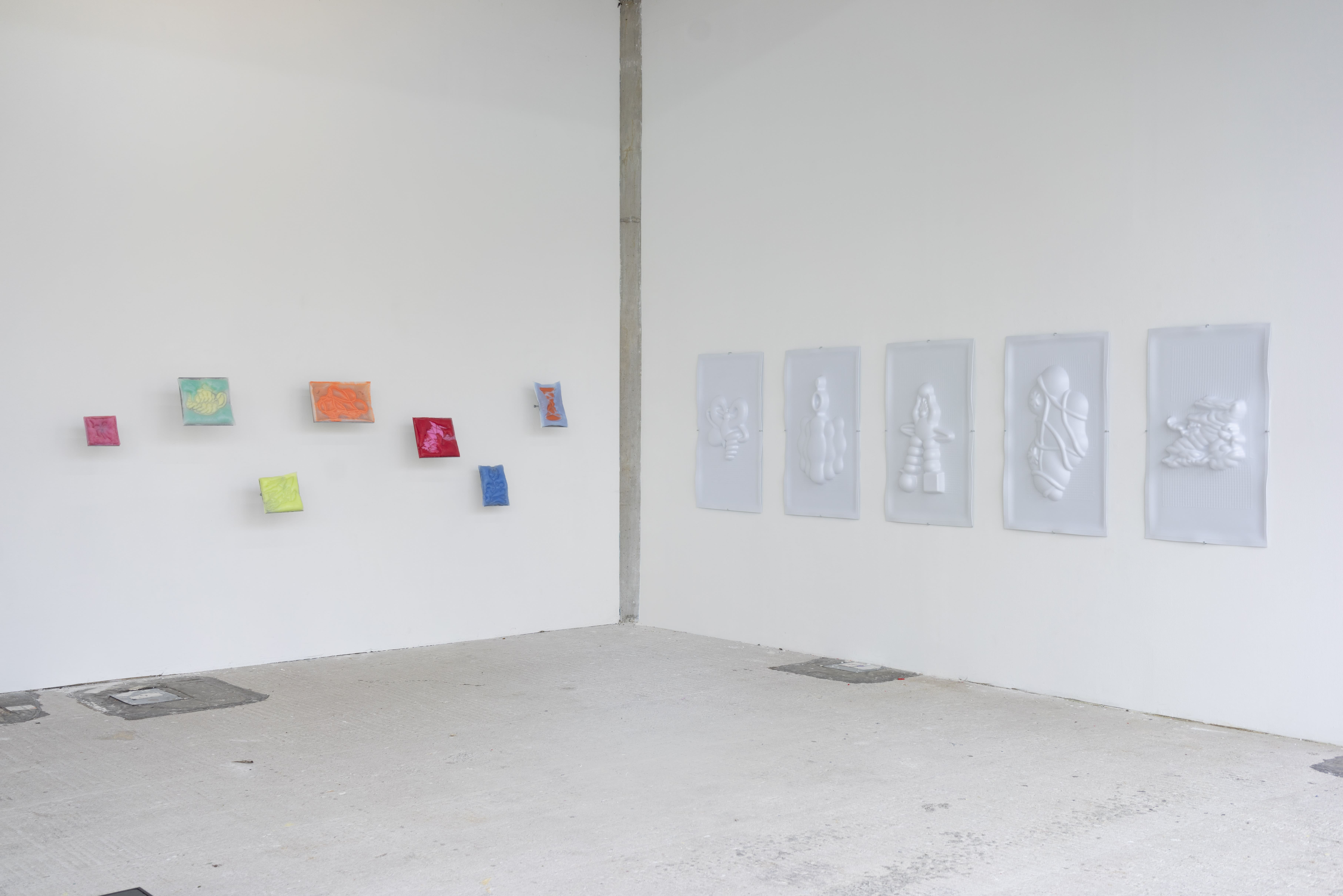
-
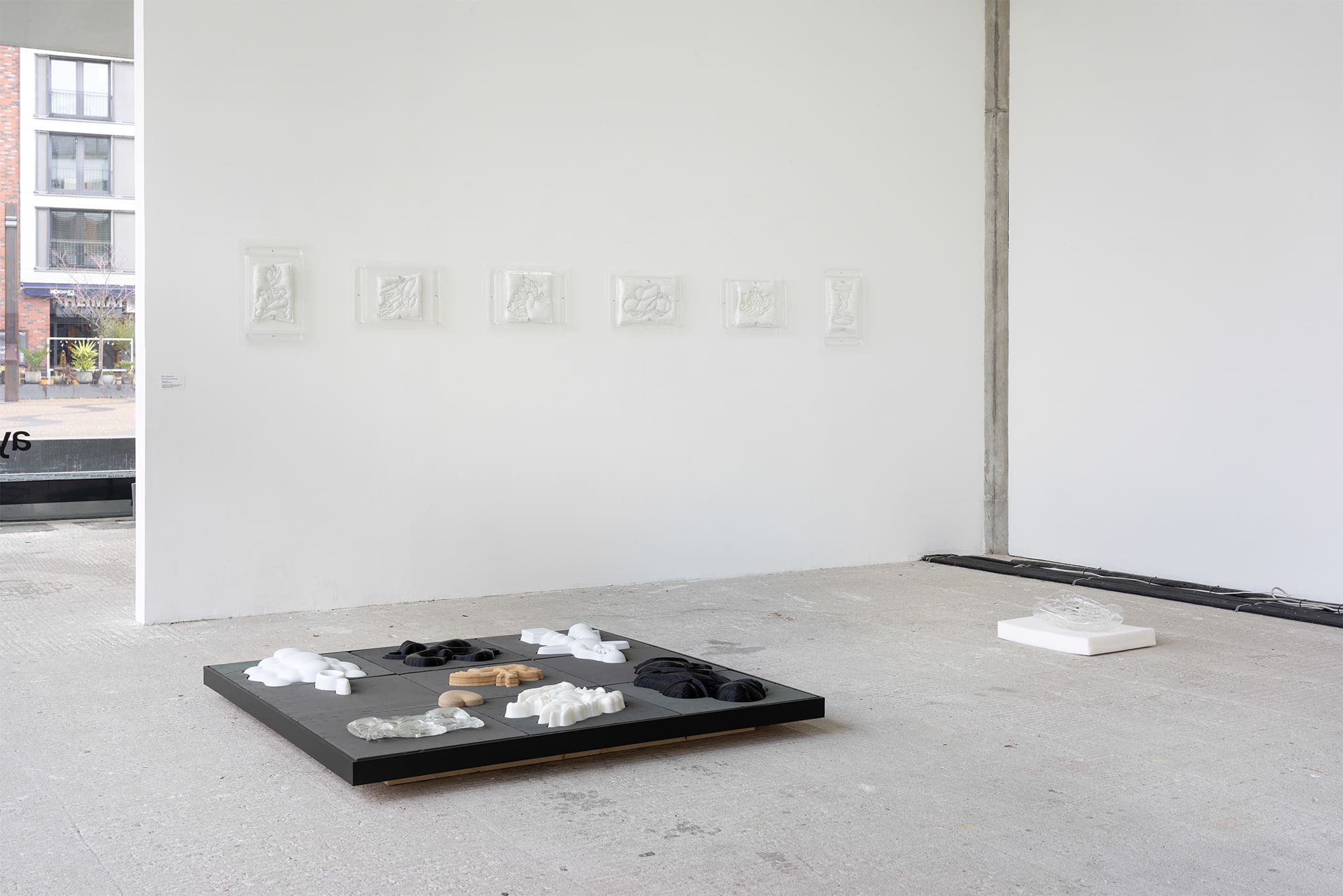
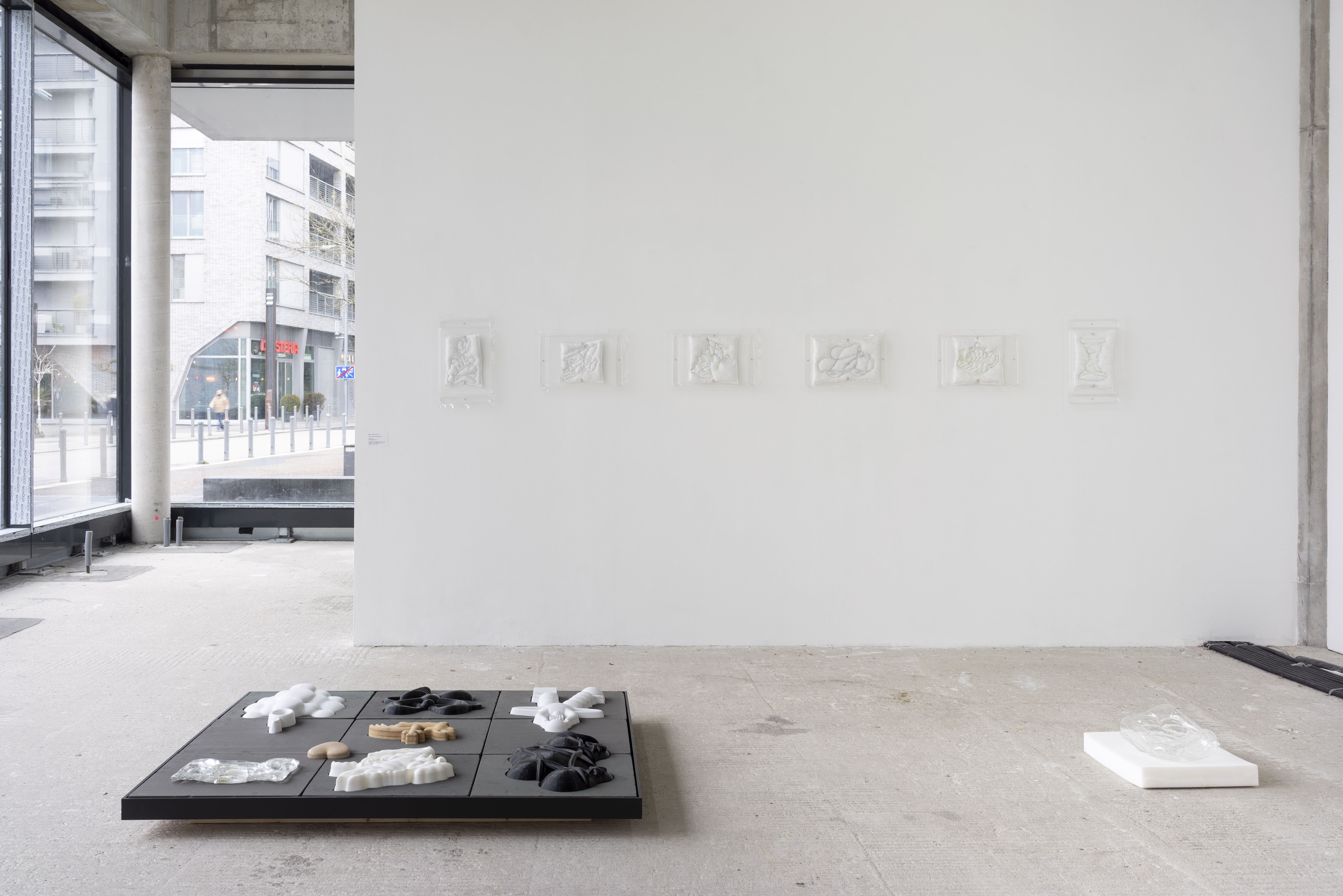
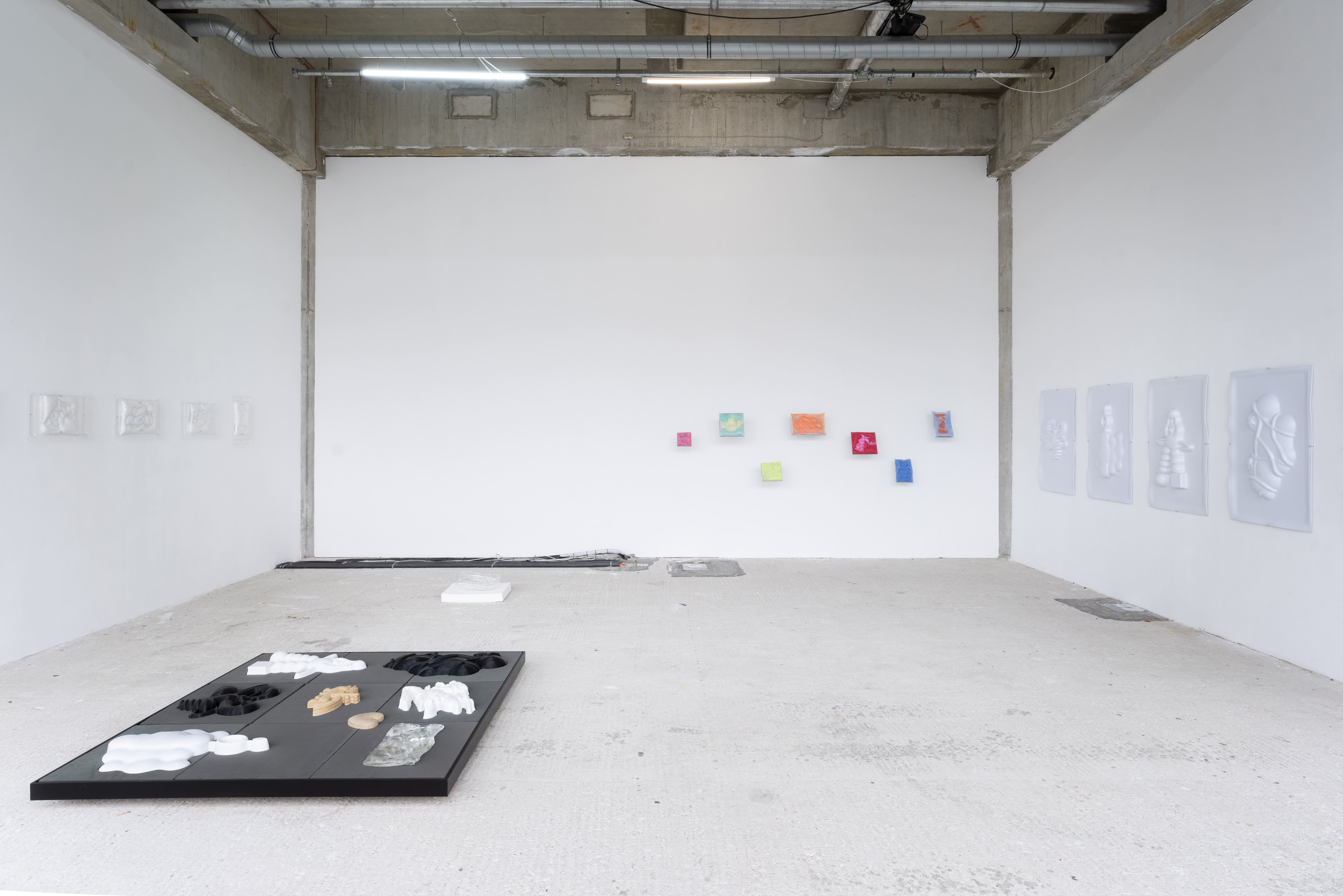
The exhibition Plus, Minus, Null (2025) continues the conceptual trajectory developed in Woo’s earlier works Emma (2022–23) and Emma: f(n)ull (2024–25). It further expands her ongoing investigation of ambivalence, a theme she examined in depth in her diploma thesis in 2024.
In Emma (2022–23), a sculpture carved from soap depicts a fear-laden car that slowly dissolves in water and eventually disappears. This gradual dissolution suggests that a loved being continues to exist even after death, albeit in atomic form. The notion that “emptiness = fullness” emerged from this work and became the conceptual foundation for Emma: f(n)ull.
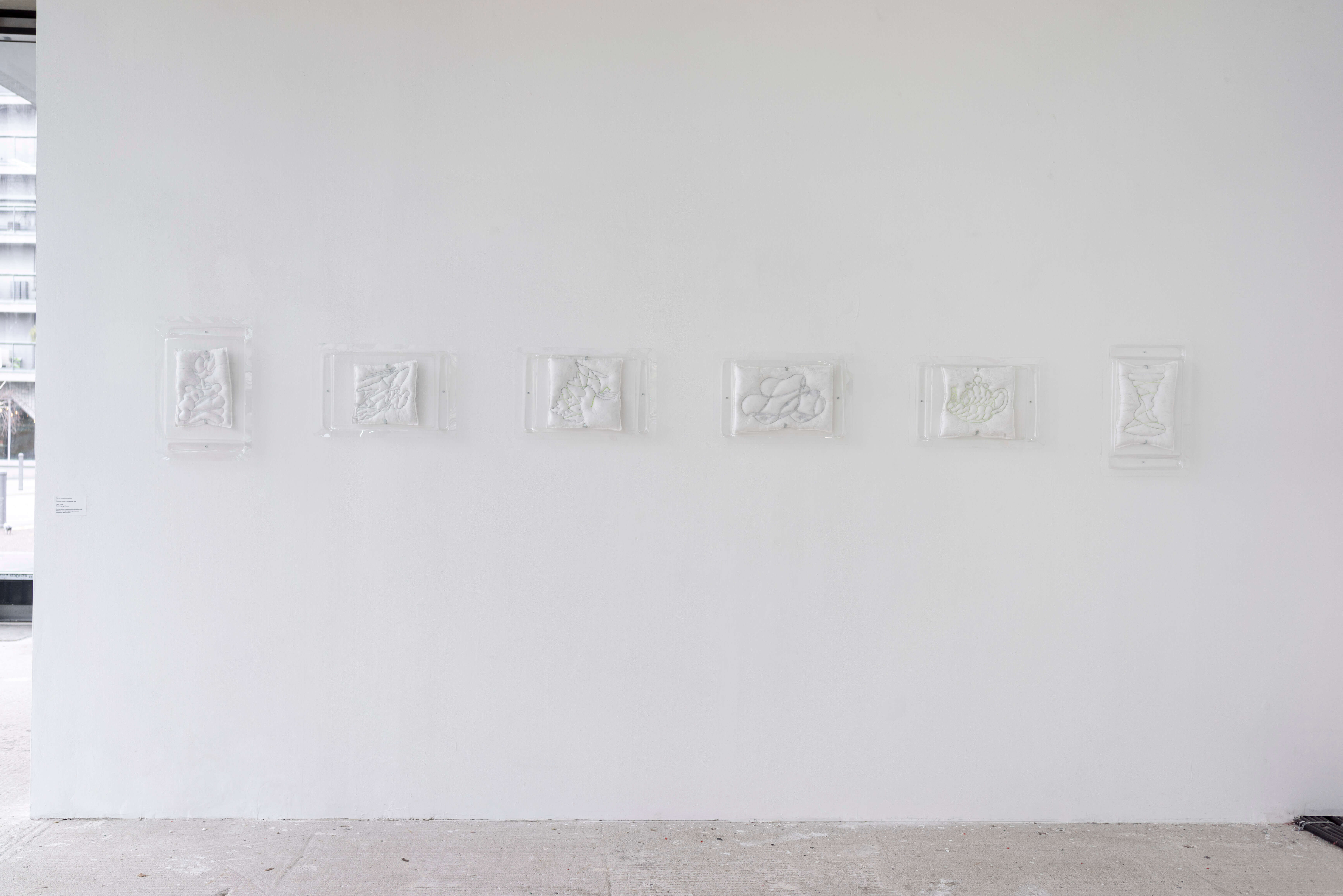
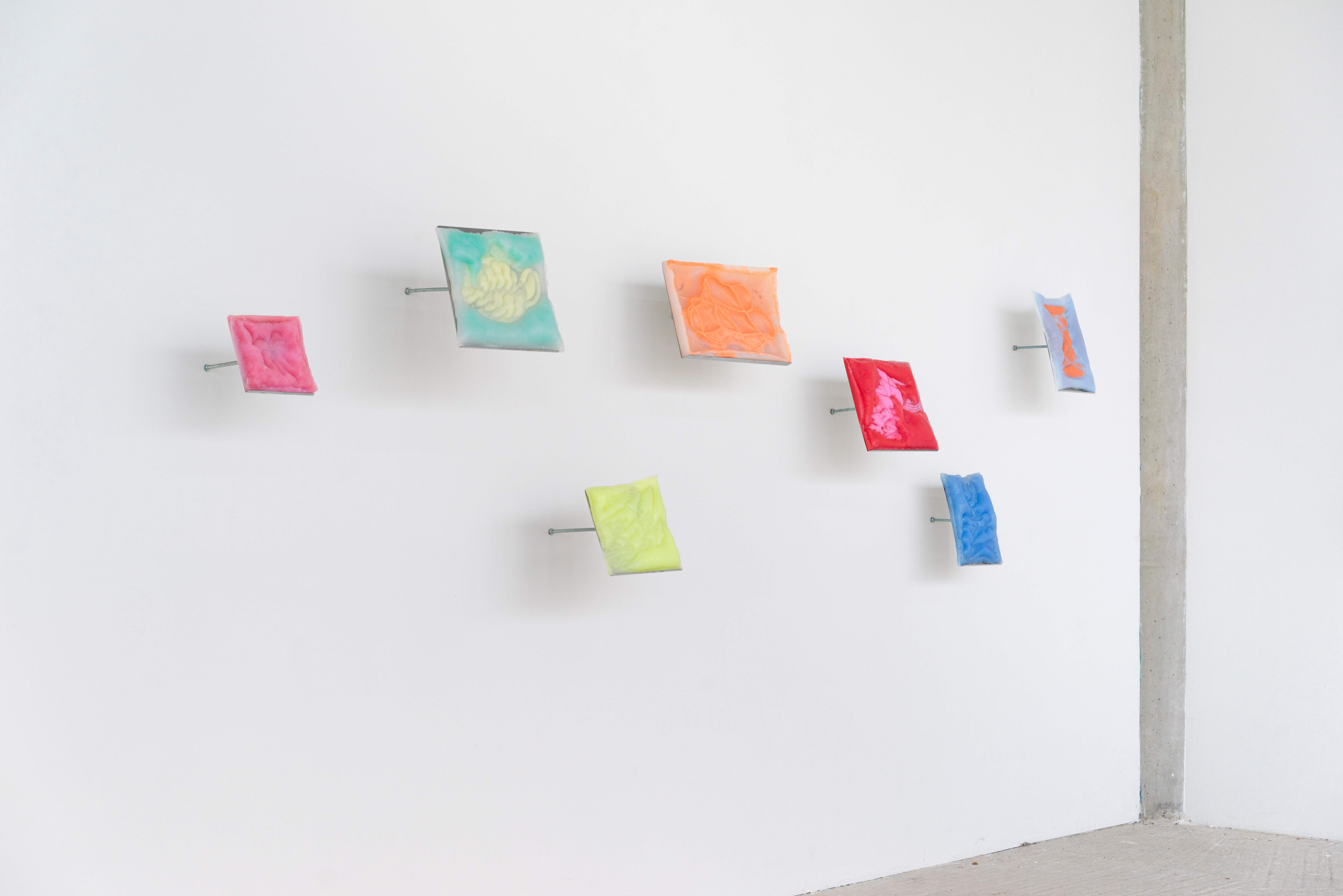
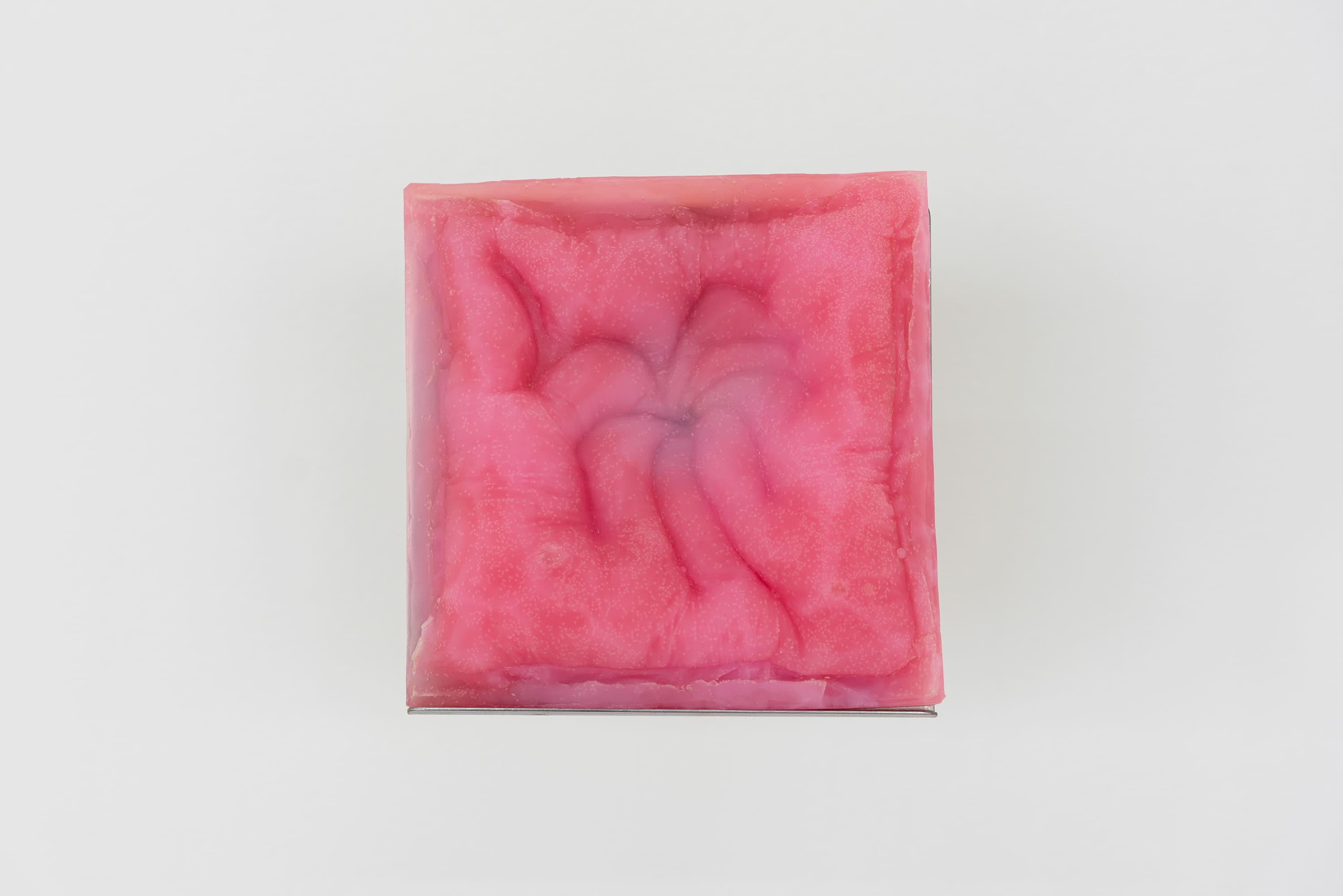
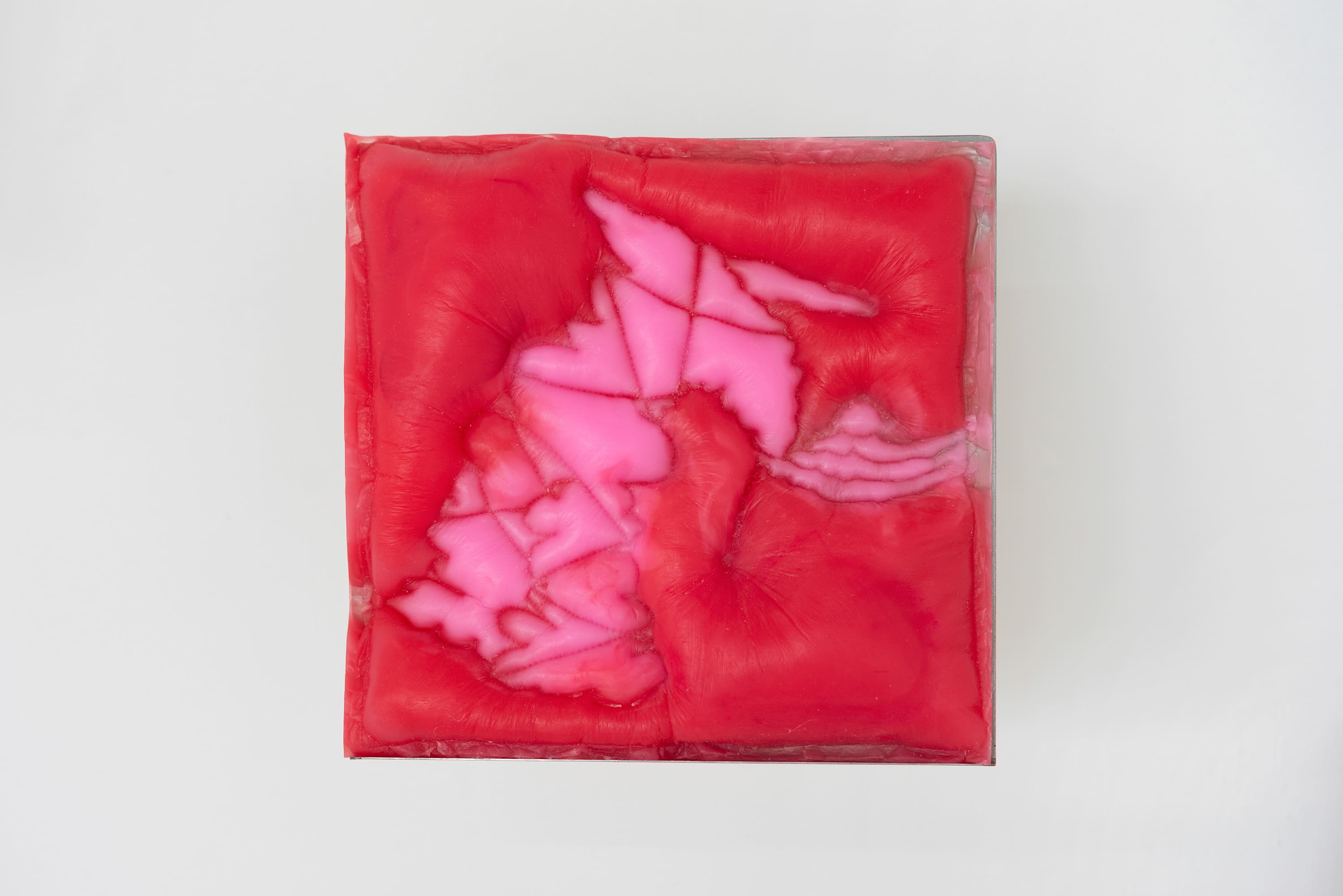
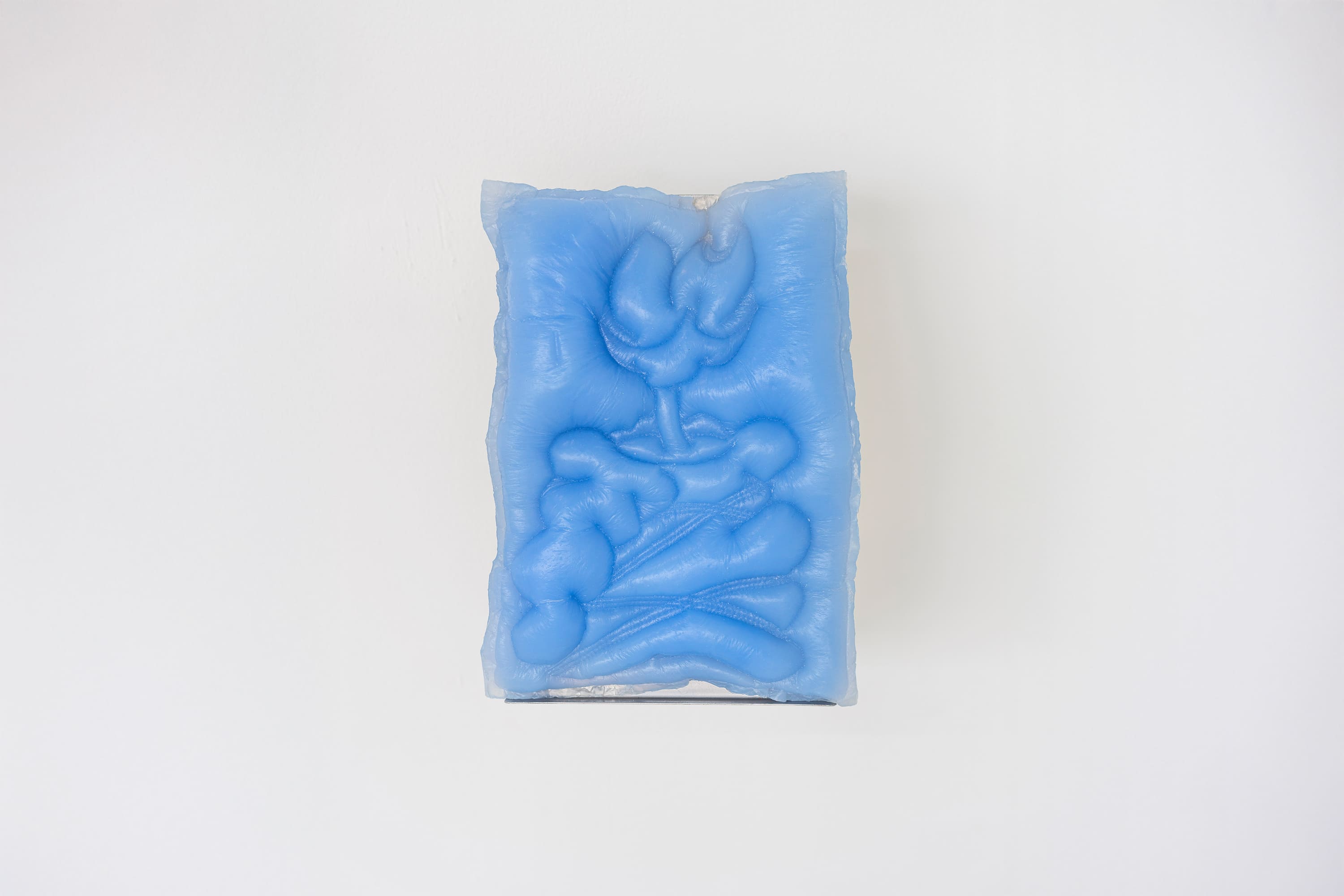
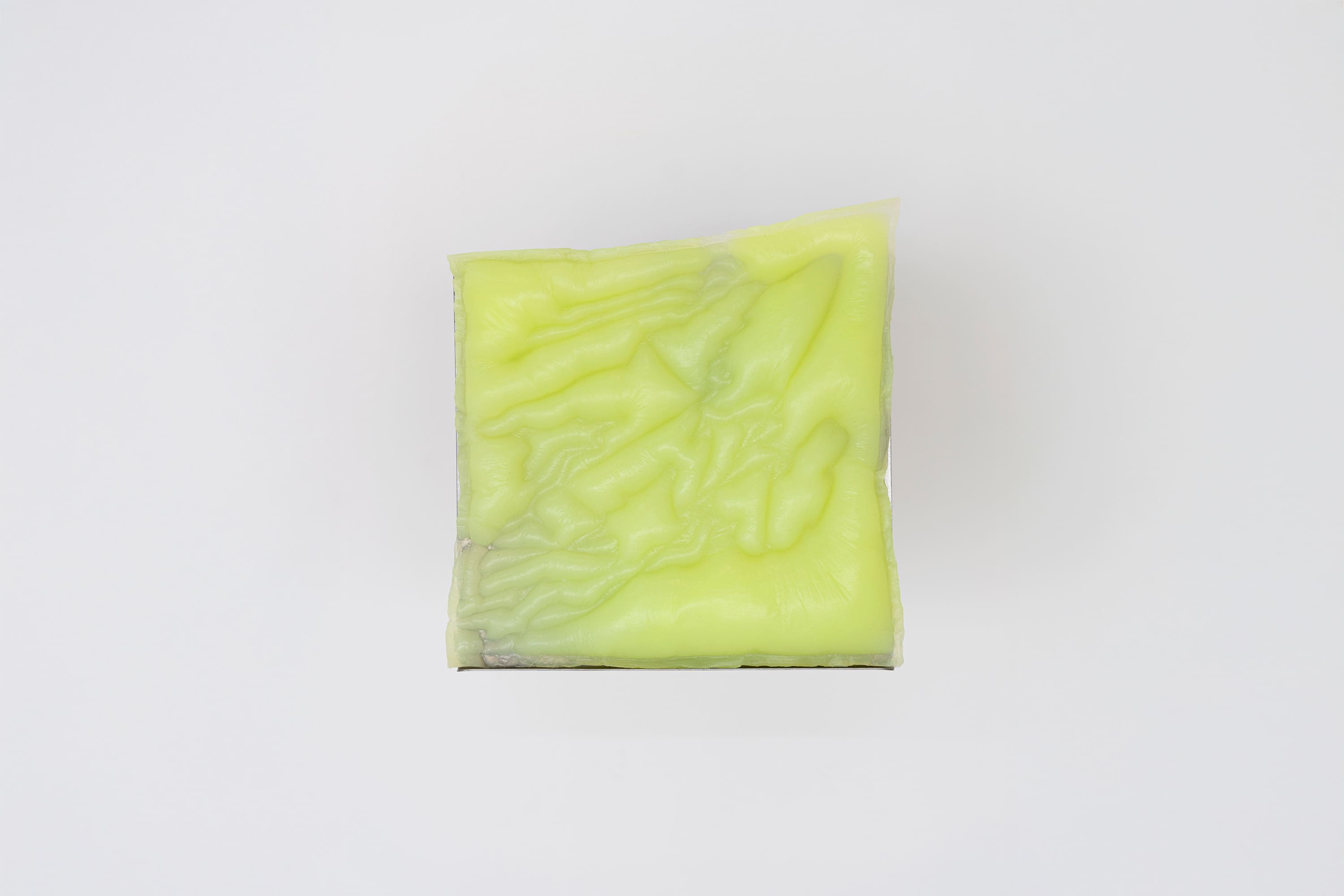
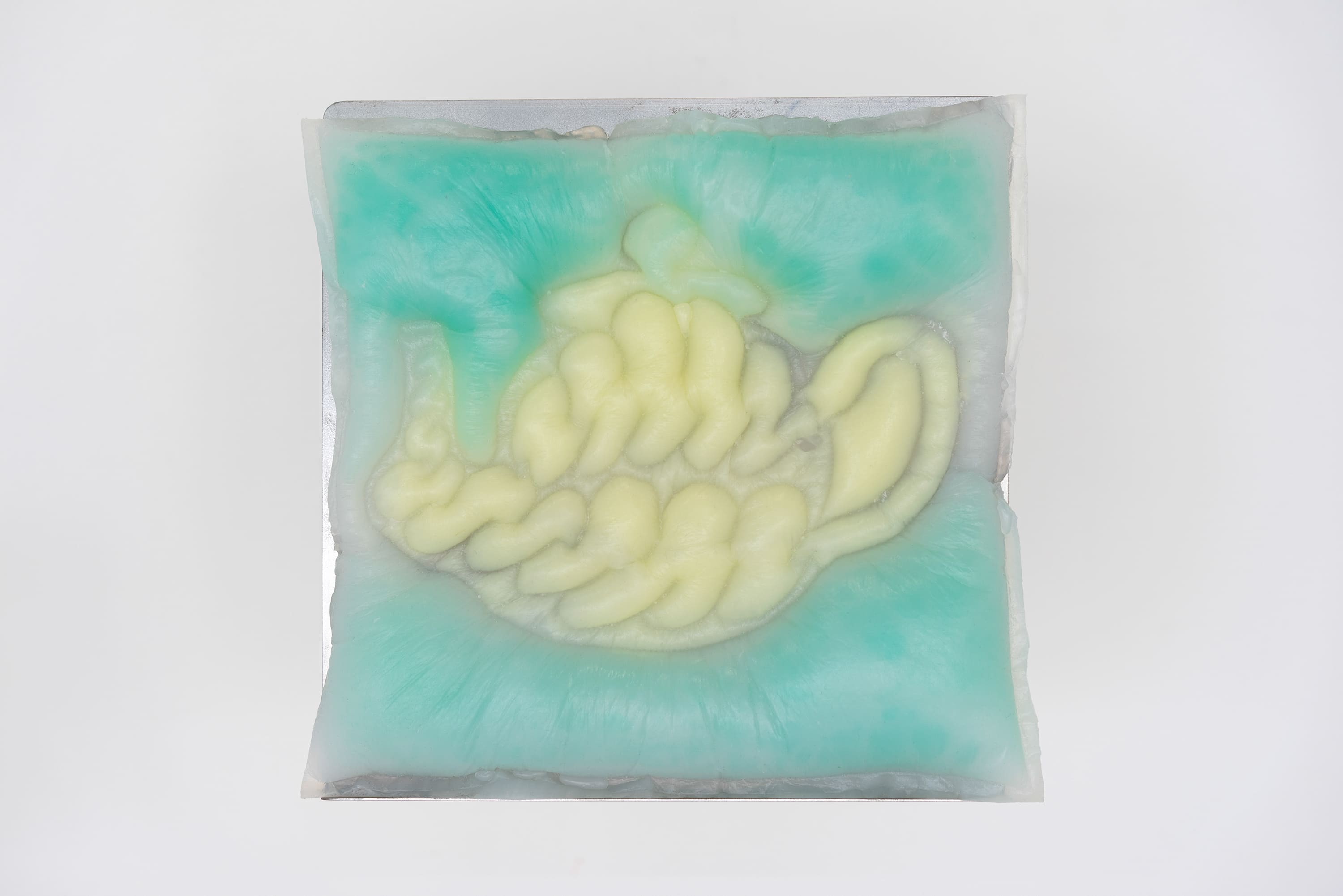
In Emma: f(n)ull (2024–25), the original high reliefs of the earlier textile works become low reliefs through a silicone-driven process of emptying. These low reliefs are then filled with plaster, returning once again to the state of high relief. This sequence is further extended in the works produced through thermo-vacuum forming, in which the textile material transitions from silicone to plastic. Through these multilayered transformations — and through the deliberate contrast “the heaviness of love (Fullness)” and “the lightness of dissolution (Null/Emptiness)” in material weight across textile, silicone, plaster, metal, and plastic — she explores the physical conditions of “fullness and emptiness” across diverse materials, with each transformation enabling newly emerging forms.
Her diploma work focuses on “emptiness” as a state that arises from the ambivalence between life and death. As life and death are intertwined as cause and effect, their opposition coexists. From the perspective of the Buddhist teaching of Śūnyatā (Emptiness), such dualities should not be understood as separate categories but as one continuous domain. When the boundary between categories dissolves, emptiness emerges. Through this condensation of polarity and on the basis of this dual encounter, the work examines how contradictory elements can be transformed into generative energy.
Traditional sculpture has long emphasized volume, yet the inner space of a sculptural form remains in a symbiotic relationship with its external form. Filled space (positive) and empty space (negative) exist in mutual interdependence. In this context, Heidegger’s concept of “The Thing” recalls that a jug is defined primarily by the empty space that allows it to hold water. Drawing on this idea, and on her long-standing practice with reliefs, she foregrounds the ambivalence of life and death as well as the interplay of interiority and volume, proposing a renewed form of plasticity.
Her diploma work is organized into three primary groups, each developed in pairs.
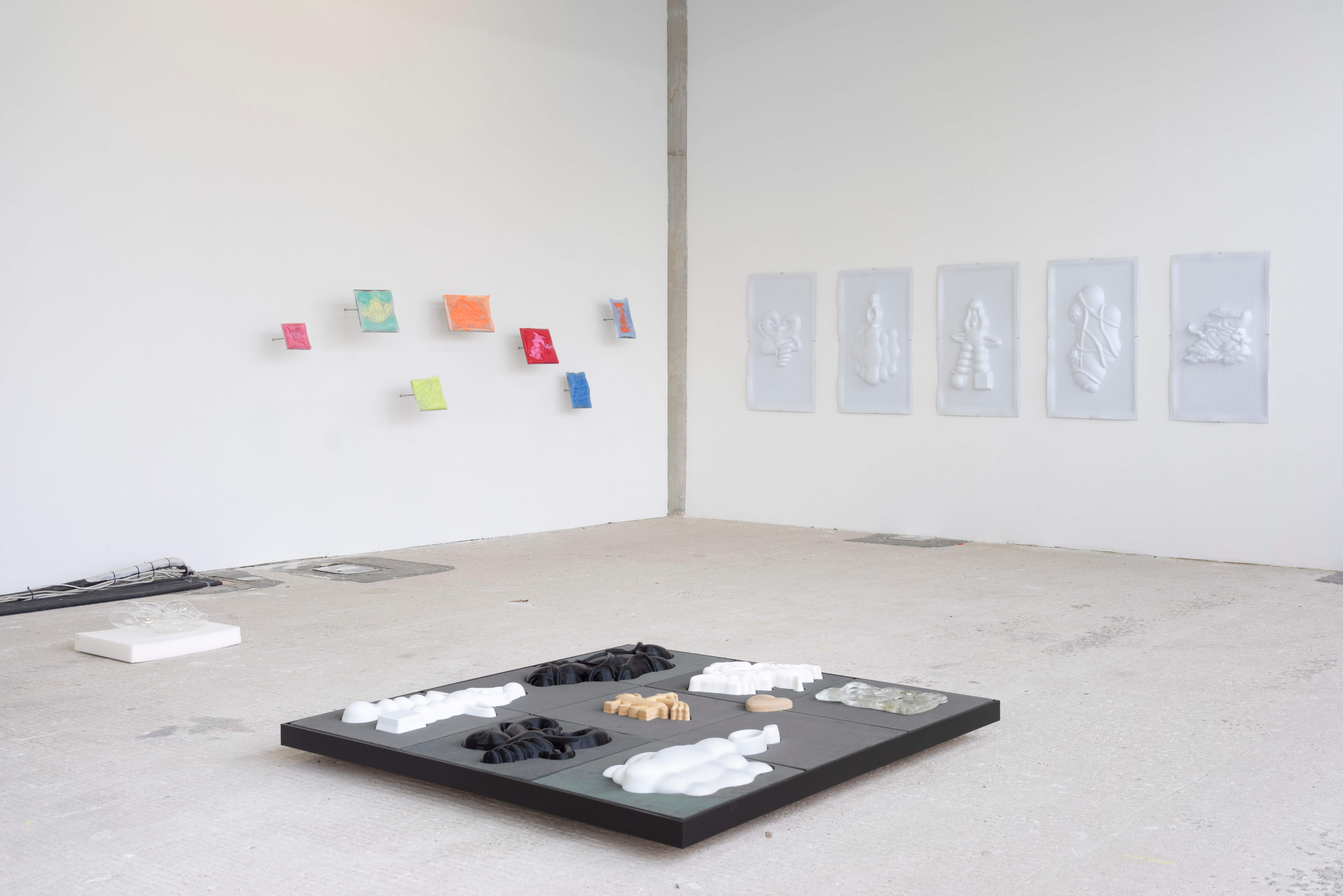
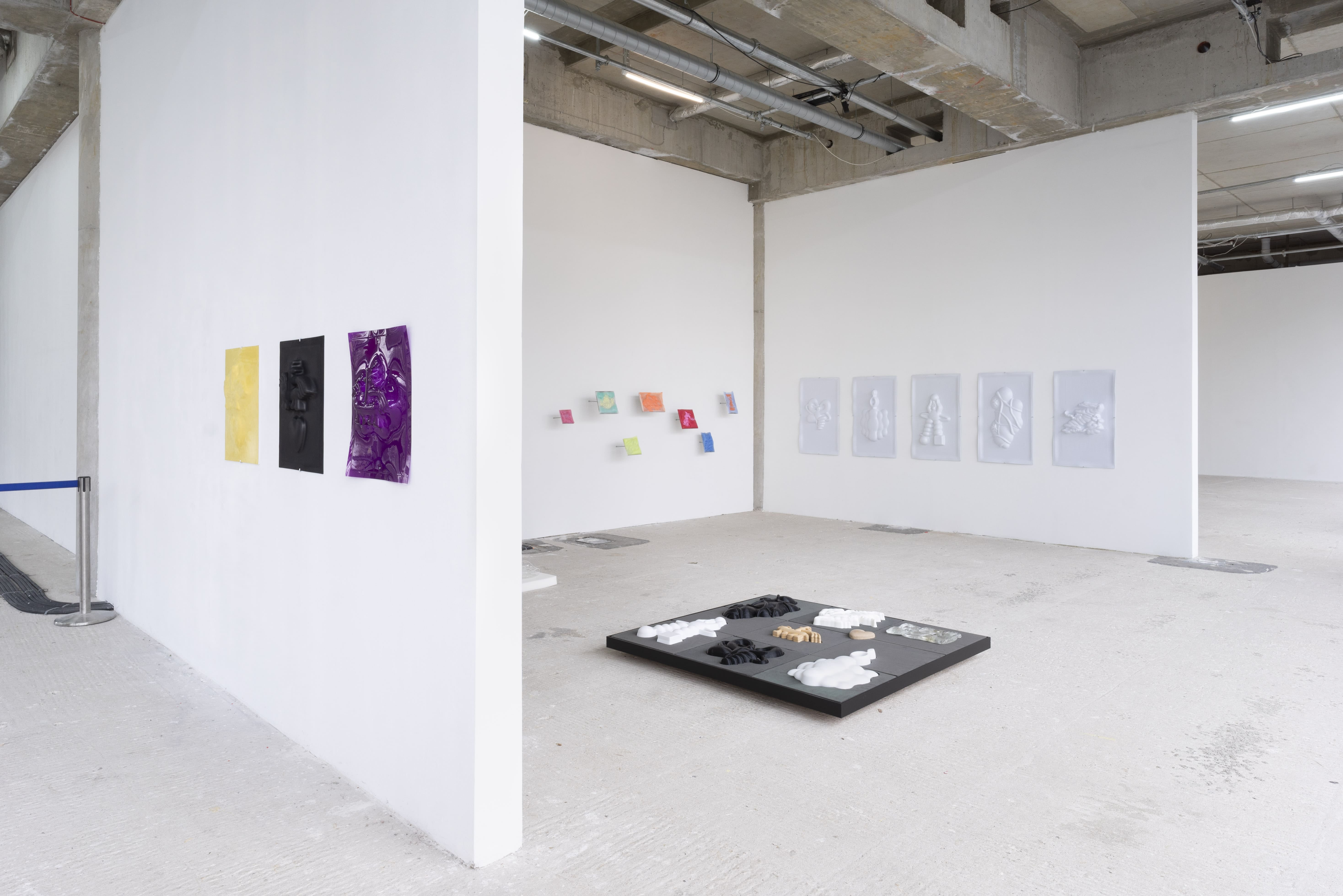
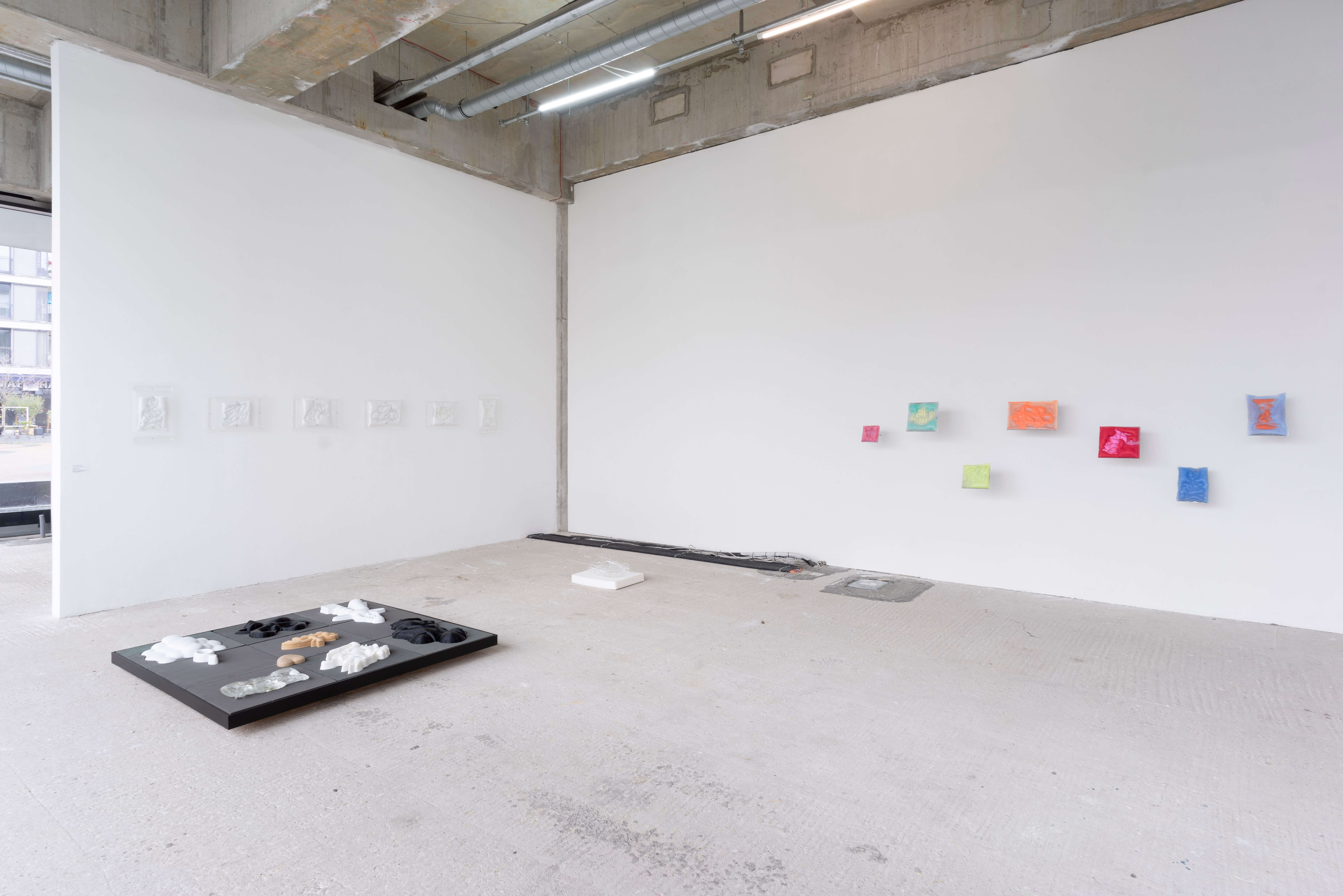
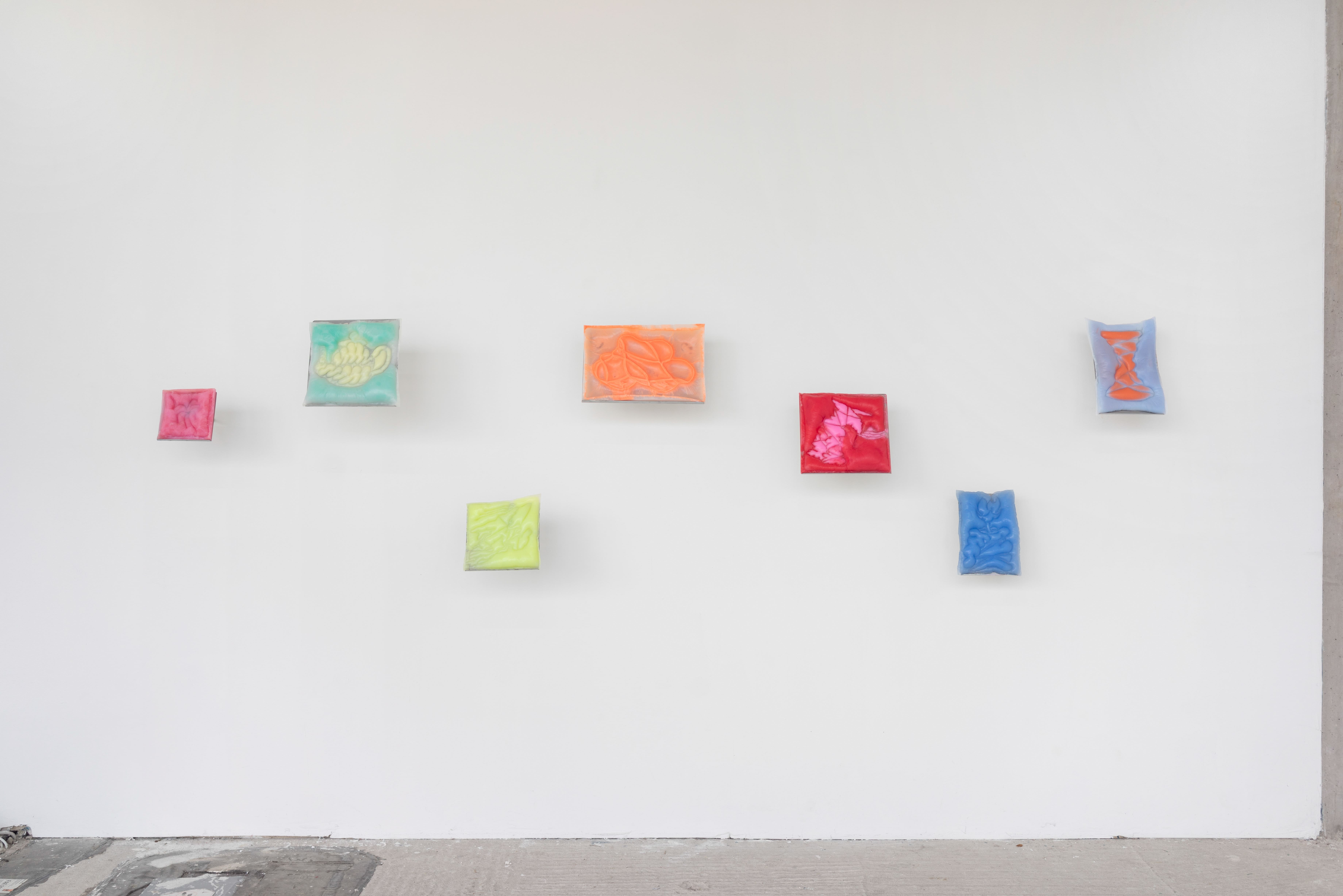
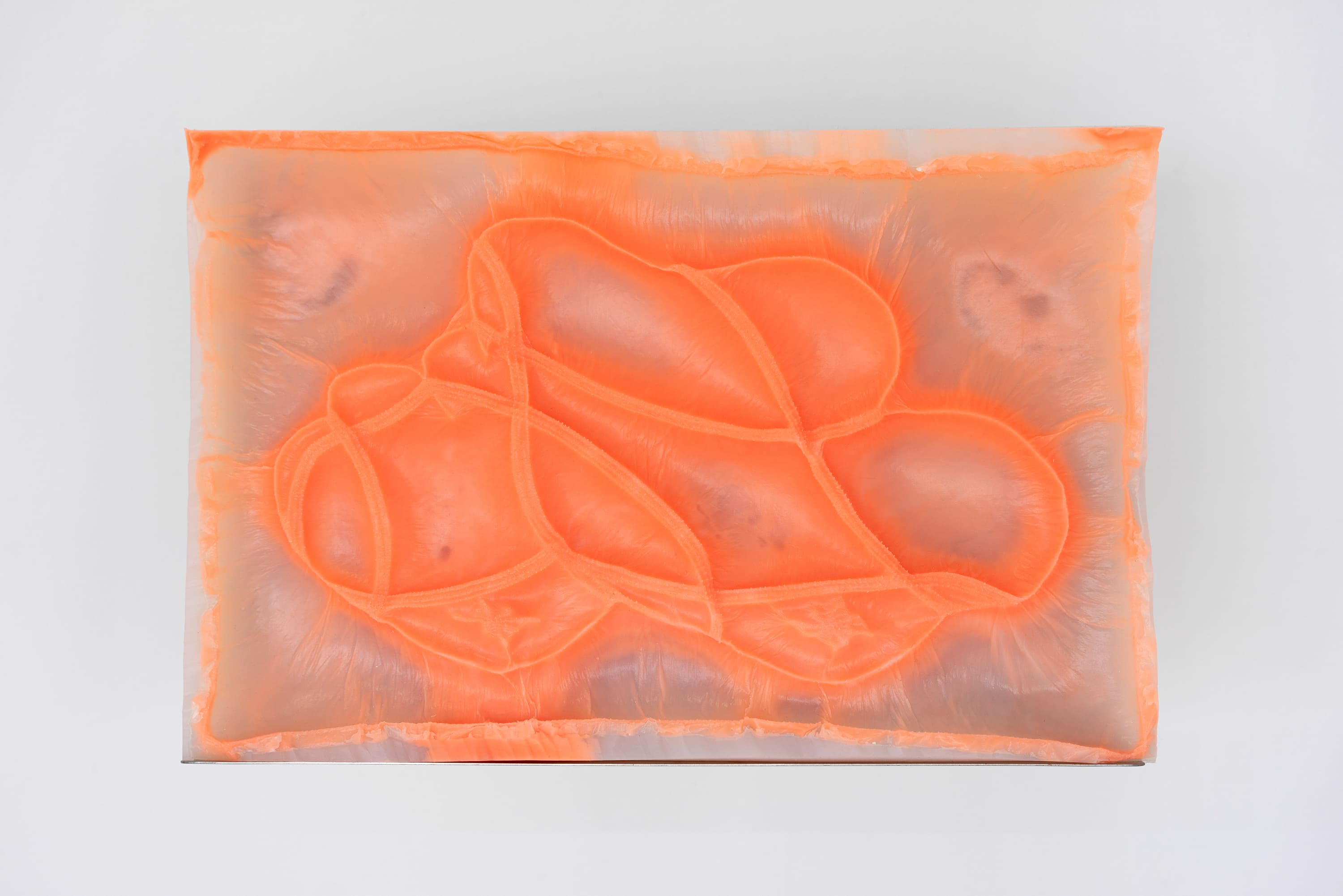
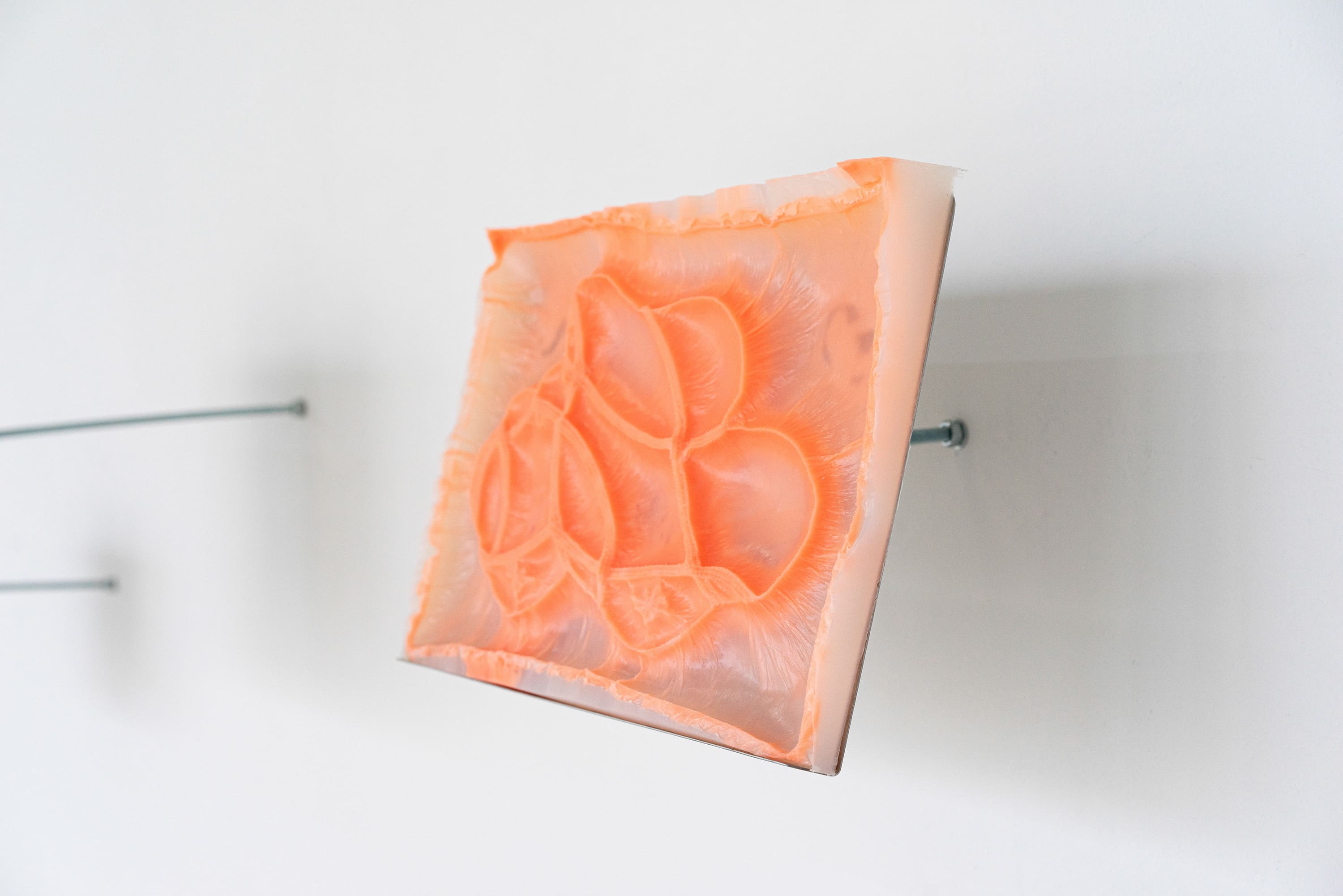
The first group consists of textile and silicone reliefs. By pouring silicone over textile reliefs, then emptying and refilling them, a relief emerges that can be read both as high relief (plus) and as low relief (minus) — an ambivalent “zero/emptiness” that appears simultaneously filled and emptied.
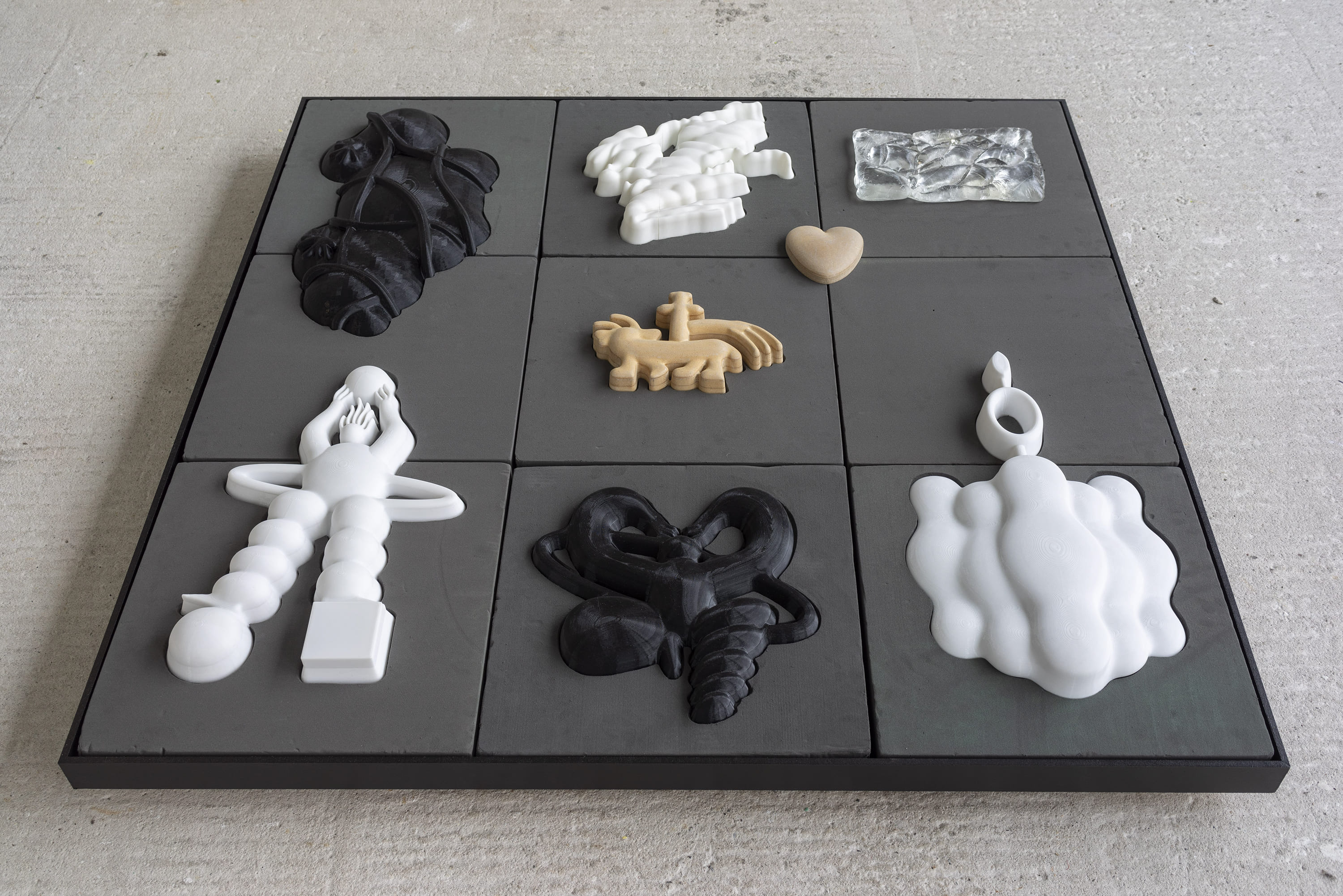
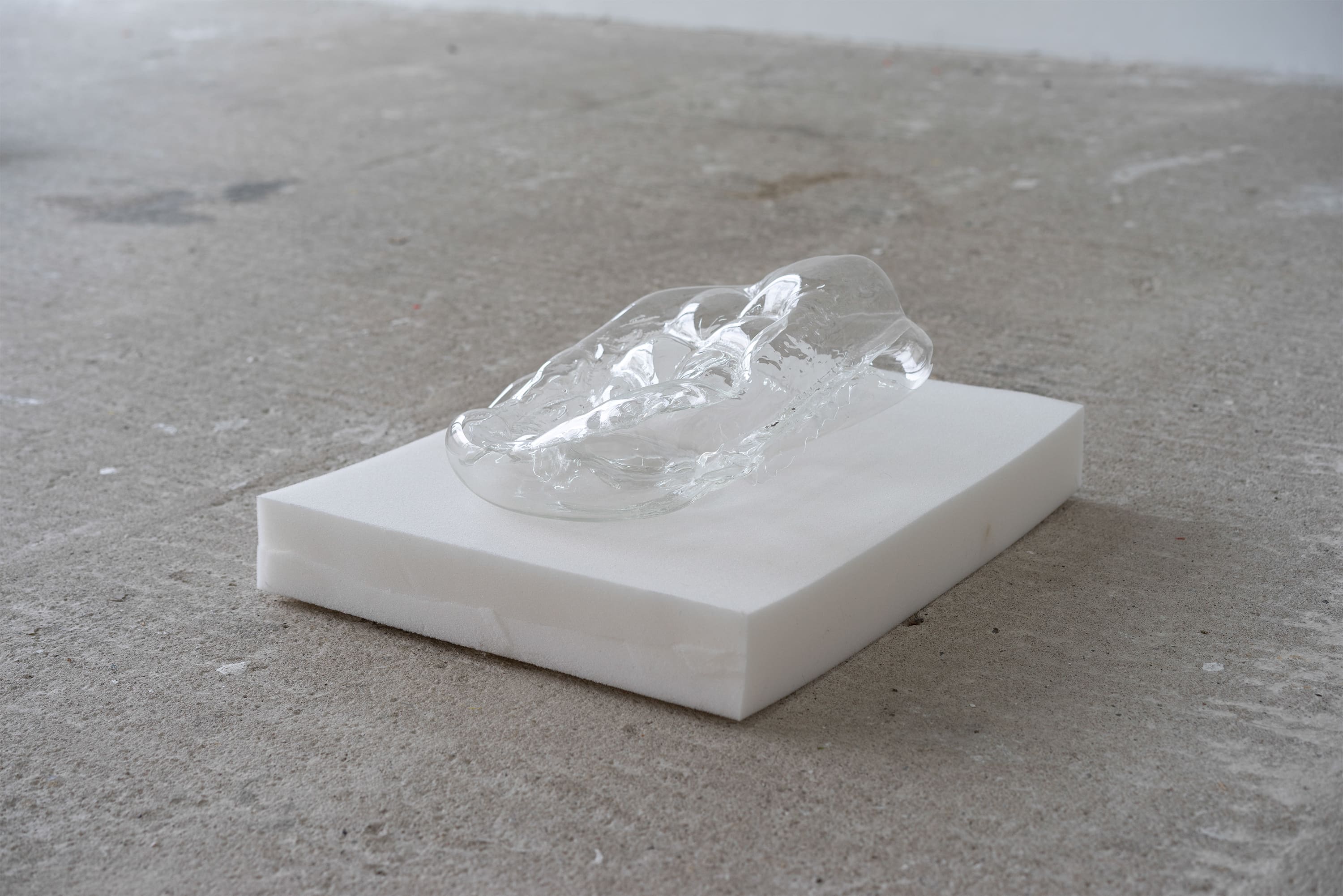
The second group is composed of glass reliefs created through the same principle.
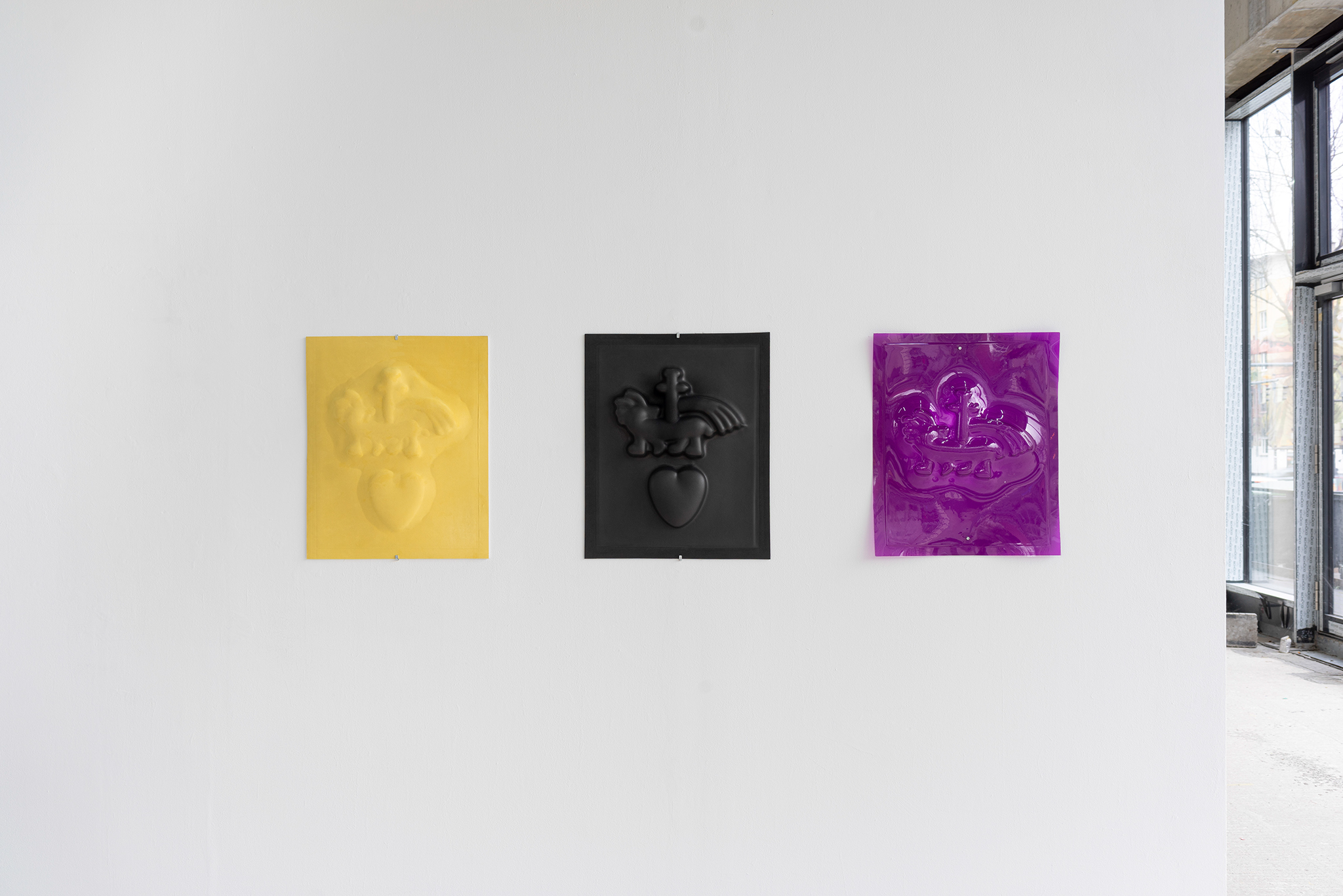
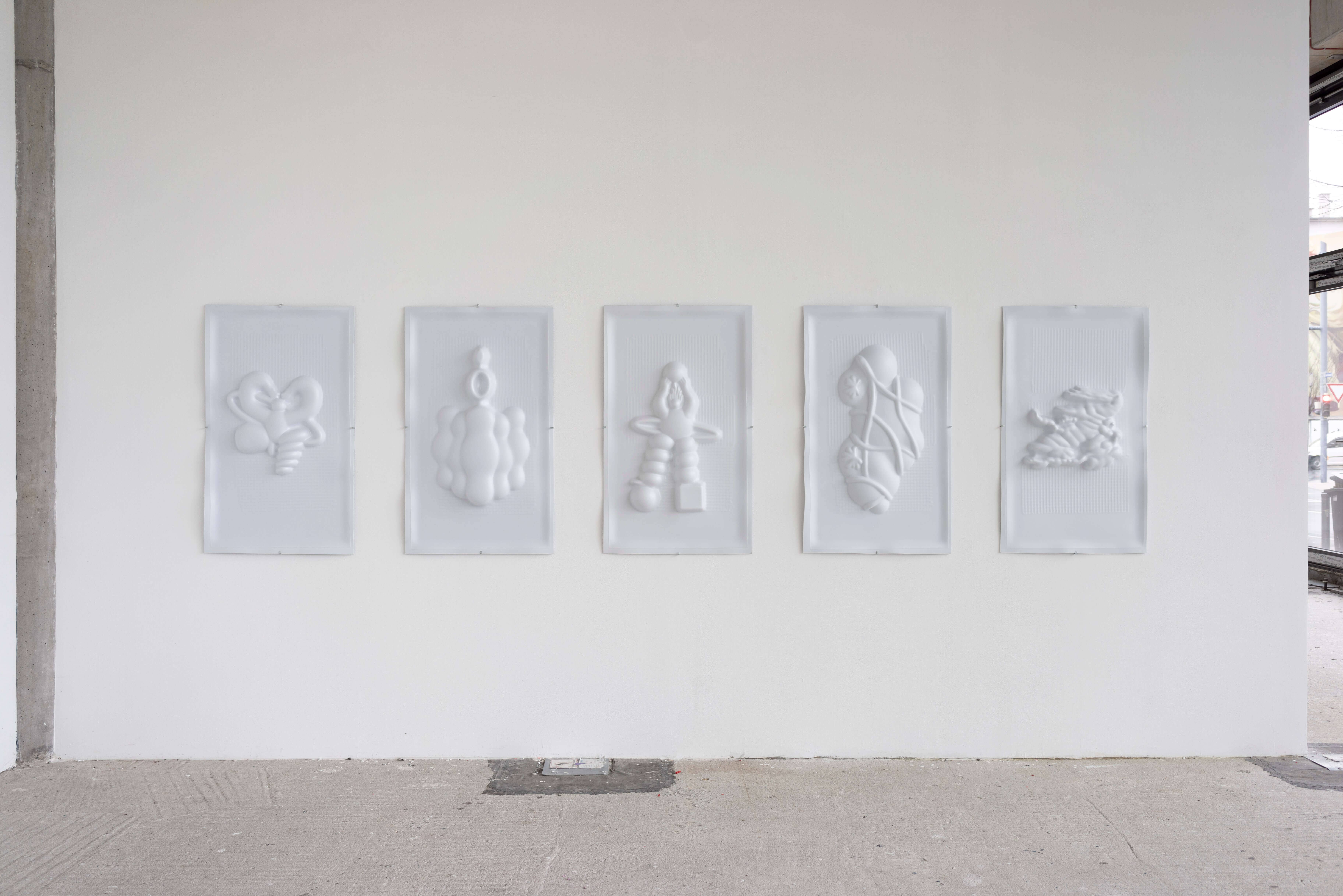
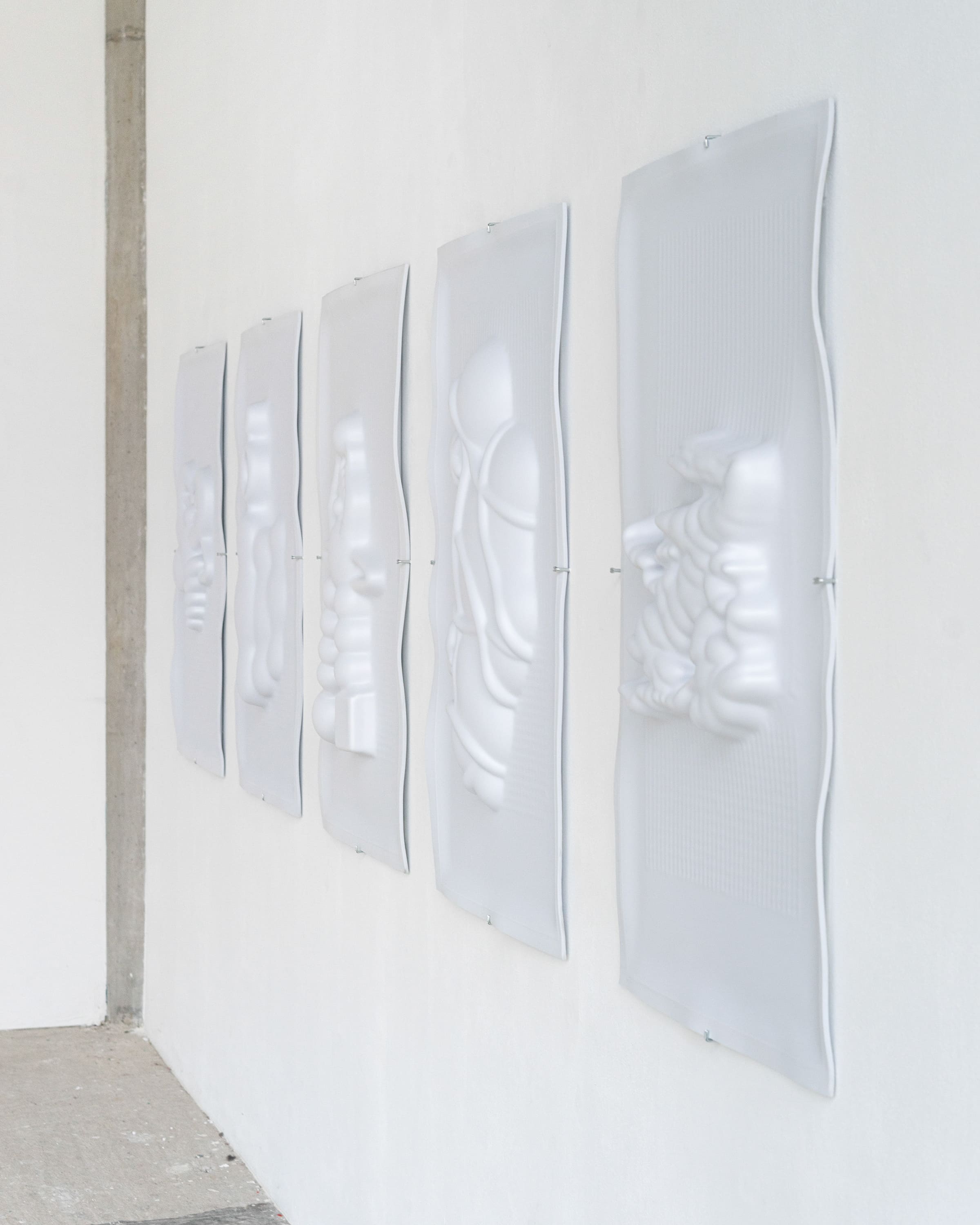
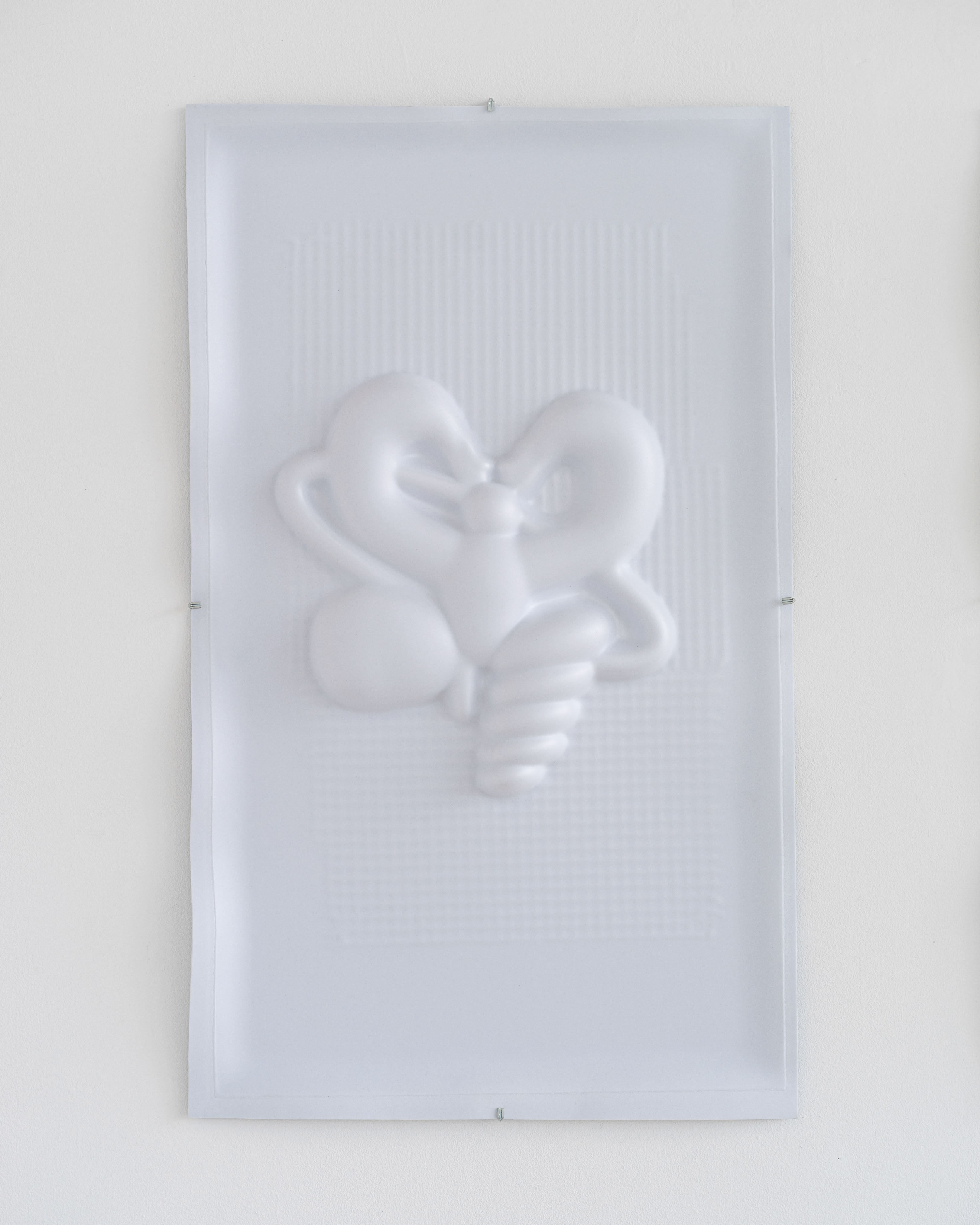
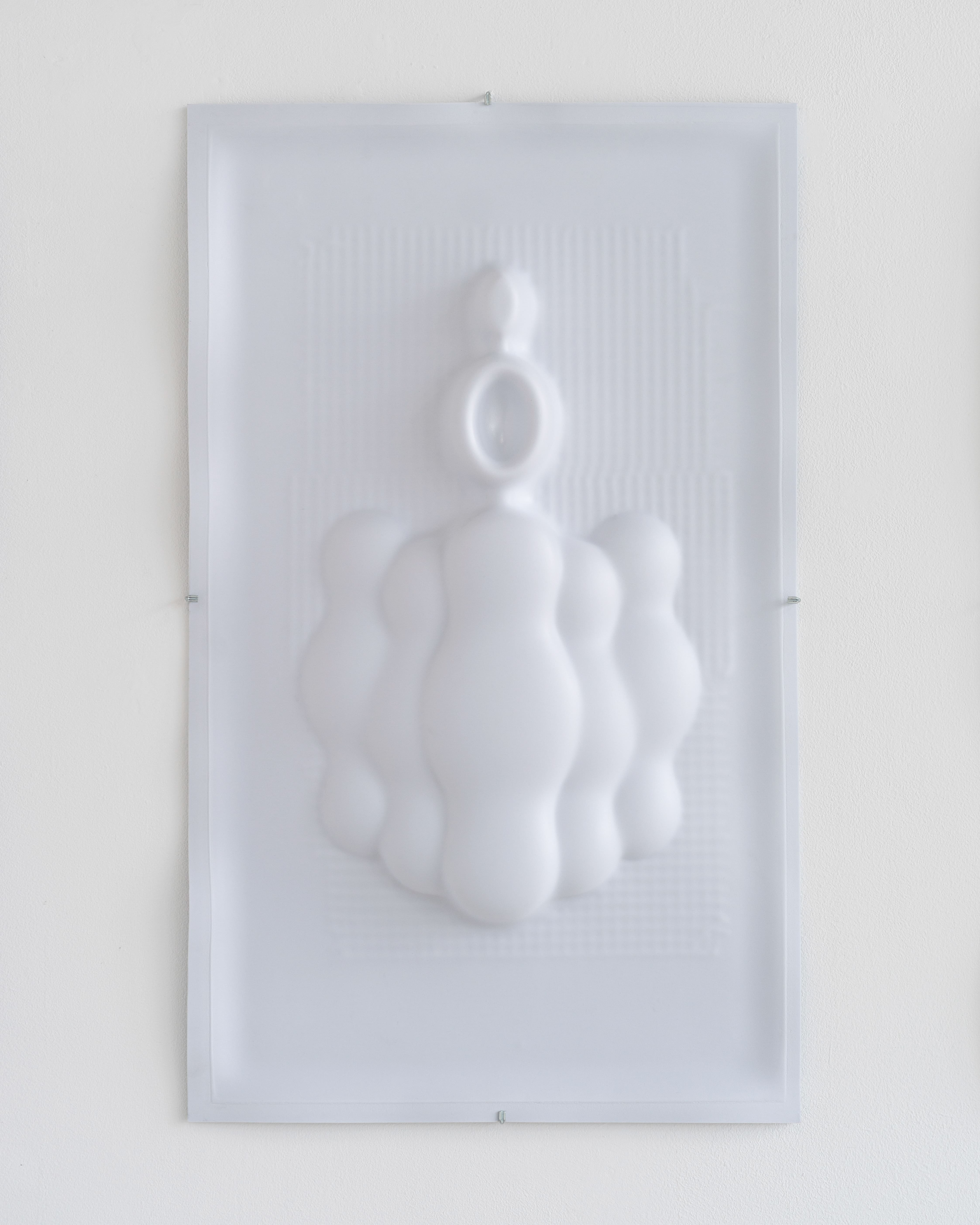
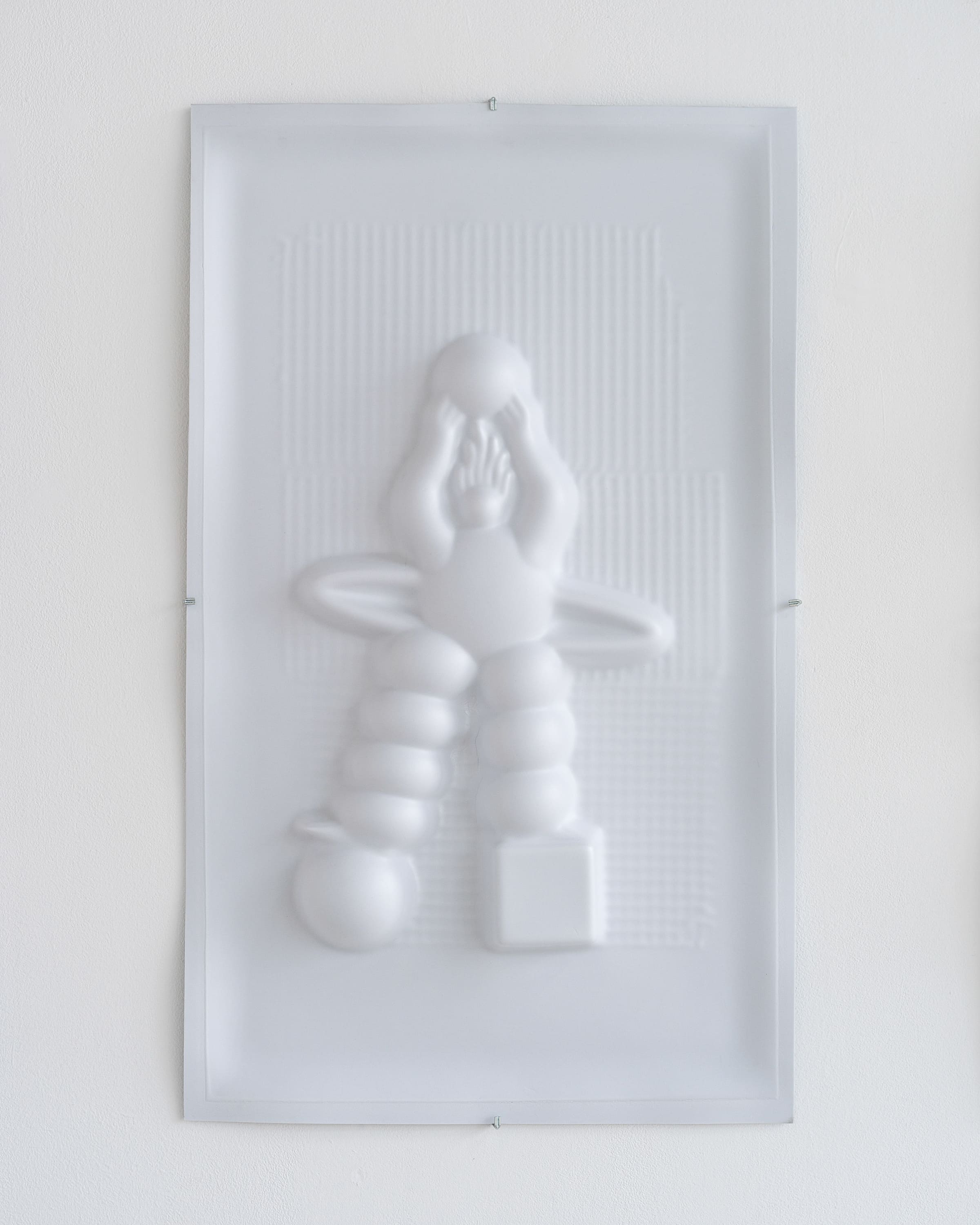
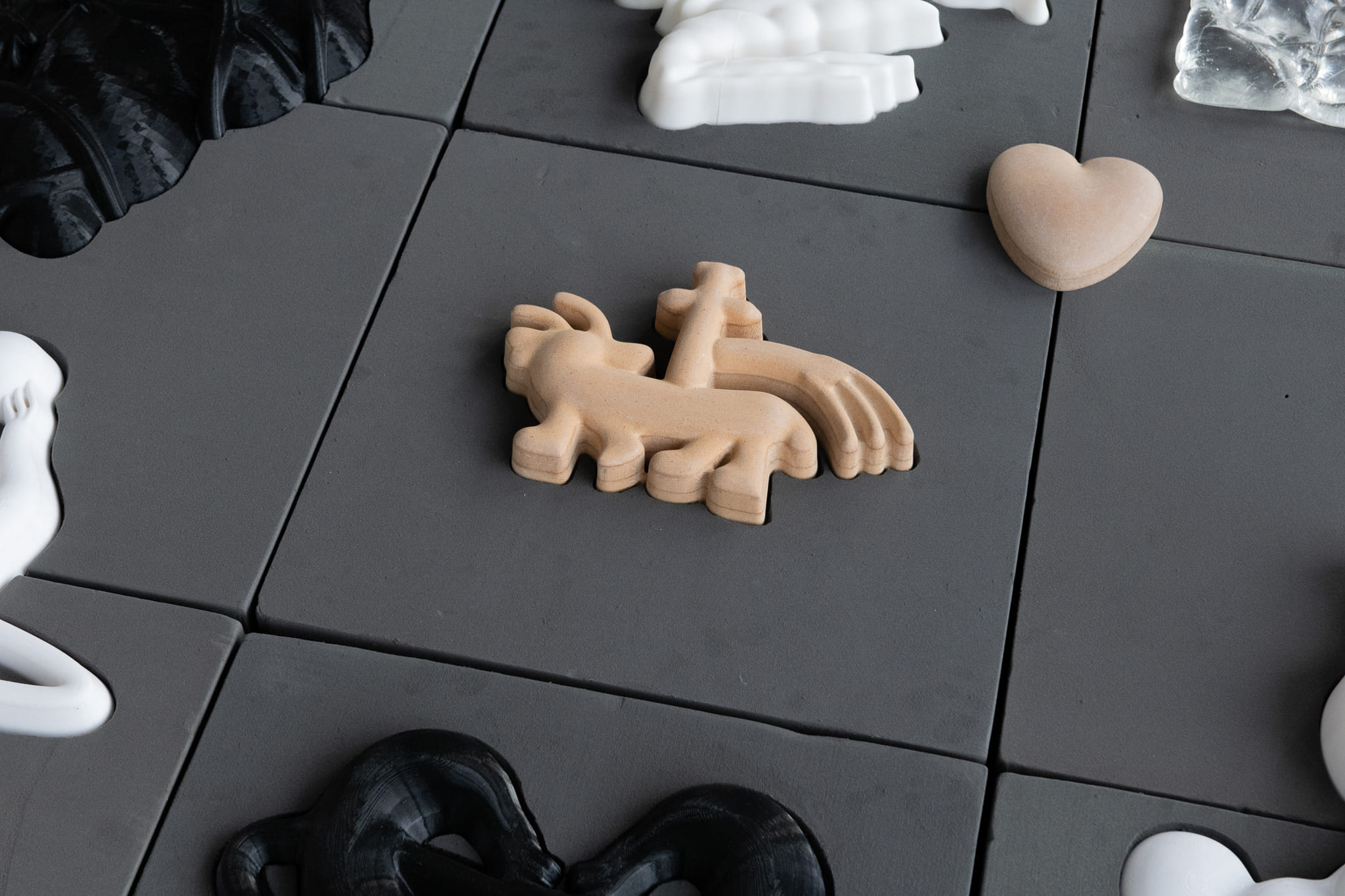
The third group comprises reliefs produced through the thermo-vacuum-forming of EVA foam. As the wooden molds are carved away through milling and the filaments are built up to form the 3D-printed objects, these structures are first filled through thermo-vacuum-forming and then emptied again, revealing newly created cavities within the reliefs and generating a distinct surface language.
Location
Hafenspace
Hafenplatz 1-3, 63067 Offenbach am Main
[Credits]
Supported by Dr. Marschner Stiftung
Supervisors: Eike König, Tatjana Stürmer, Michaela Kraft
3D-Modeling Advice: Jörg Langhorst
3D-Print Production: Reents Technologies GmbH, Jörg Obenauer
Wood Milling: Wolfgang Heide
Vacuum Forming: Heinrich Weid, Matthias Gerhold, Andreas Klober
Metal Display Support: Stephan Rösemann
Wood Mount Making: Jack Brennan
Glass-Relief Work: Torsten Rötzsch
Intallation Support: Franz Weid, Haedam Lee
Photo: Jakob Otter
The copyright and intellectual property rights for the work “Plus, Minus, Null”, its method of presentation and the accompanying artist’s text are owned by the artist Jeongkyoung Woo.
© 2025 Jeongkyoung Woo.
All rights reserved.
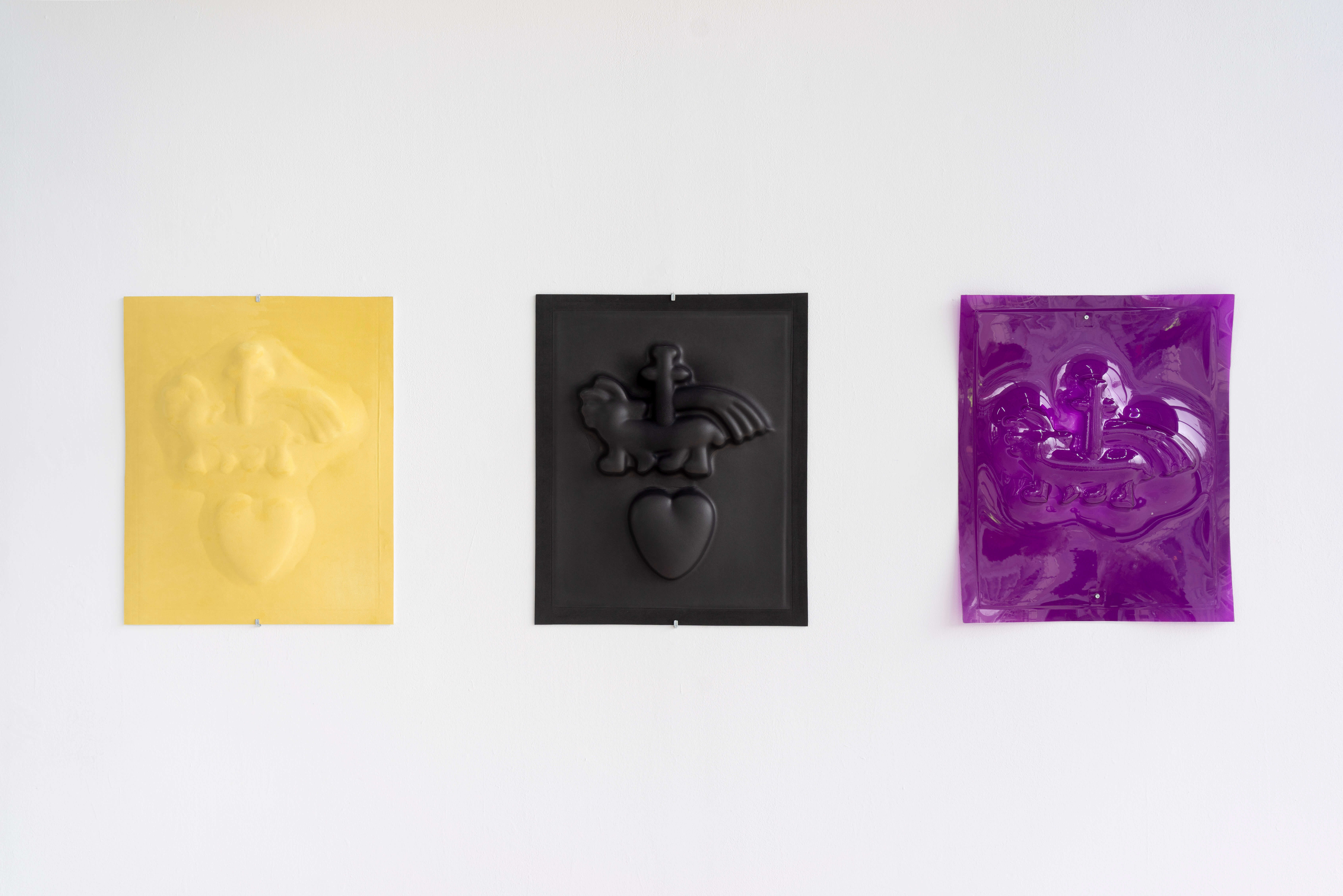
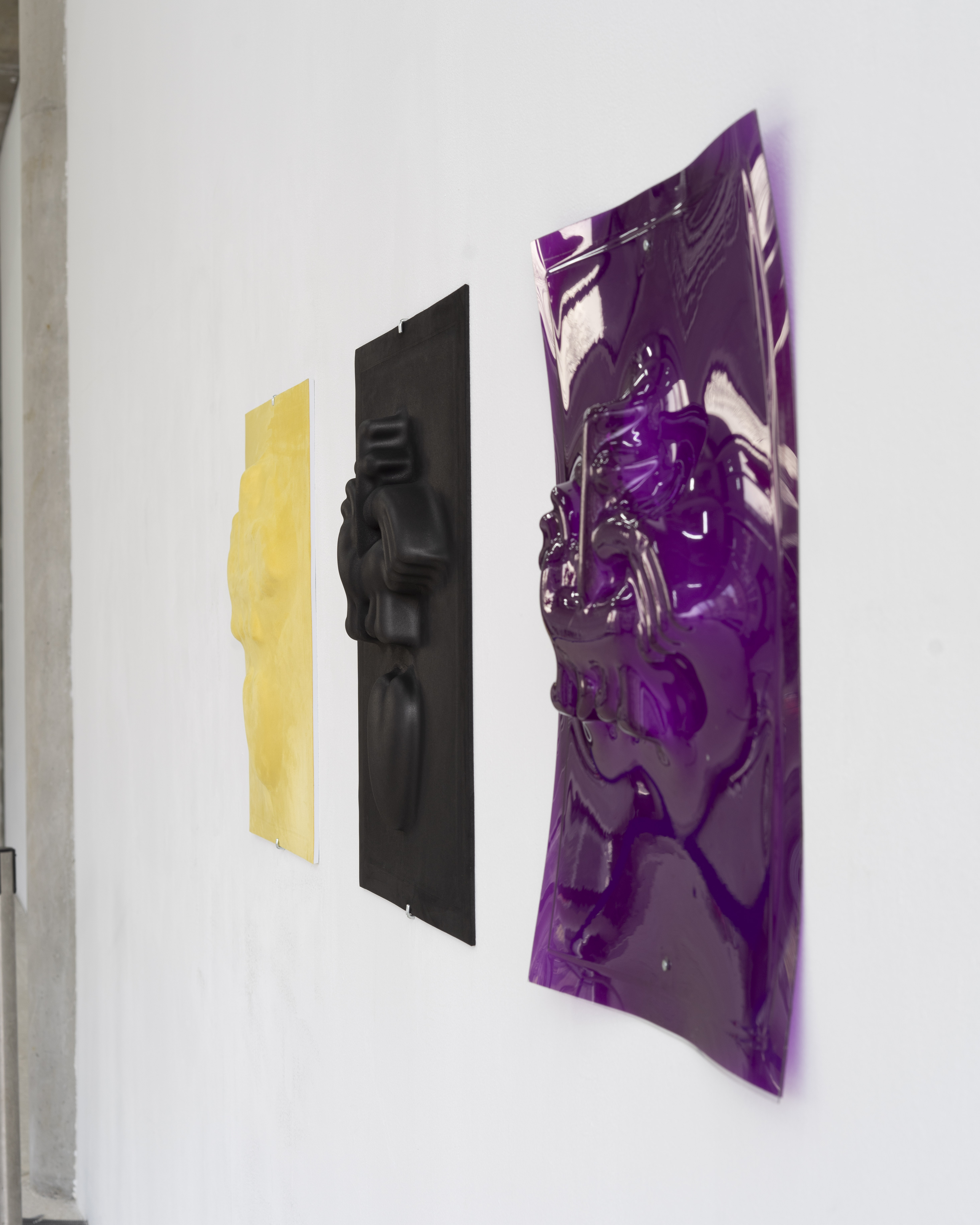
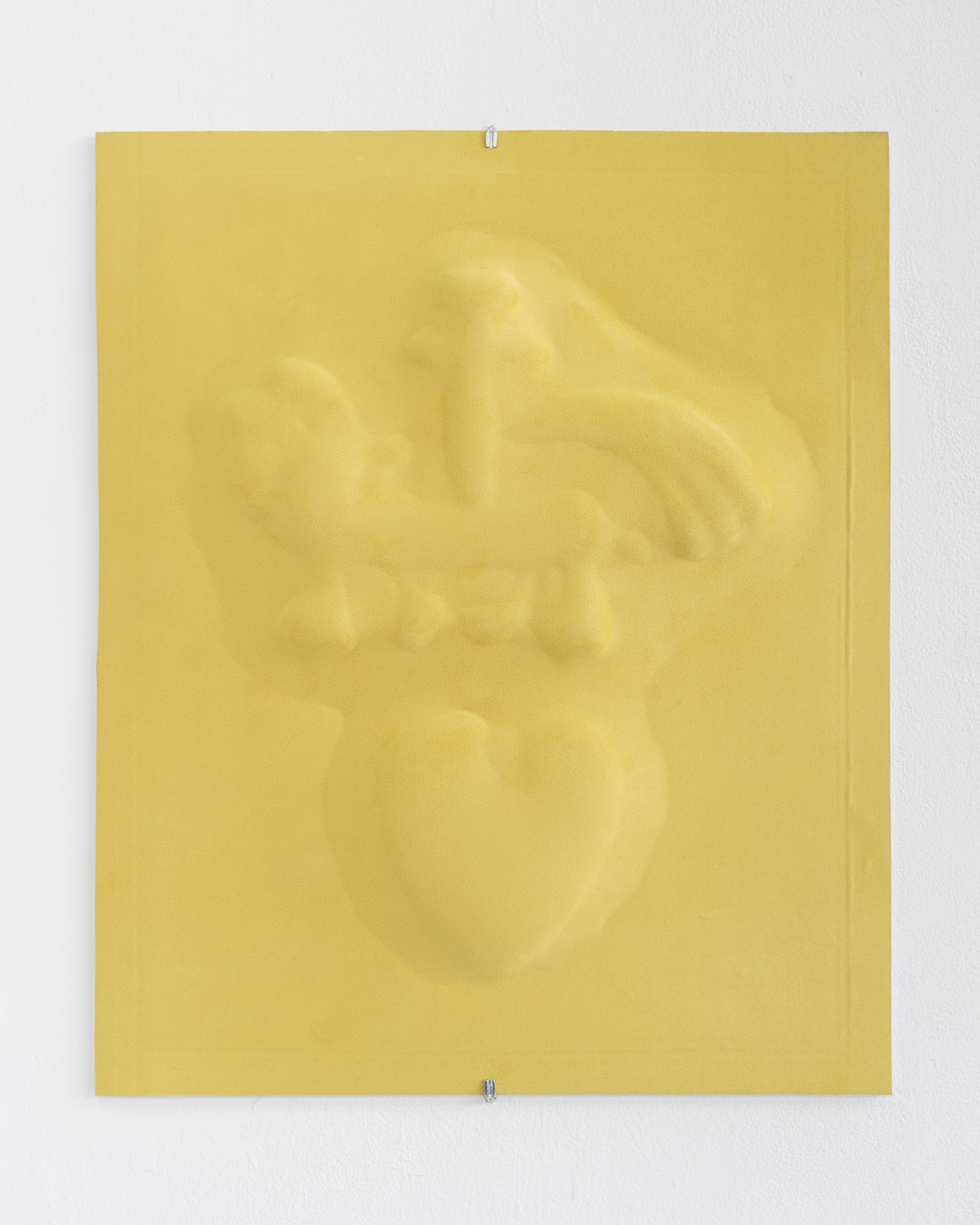
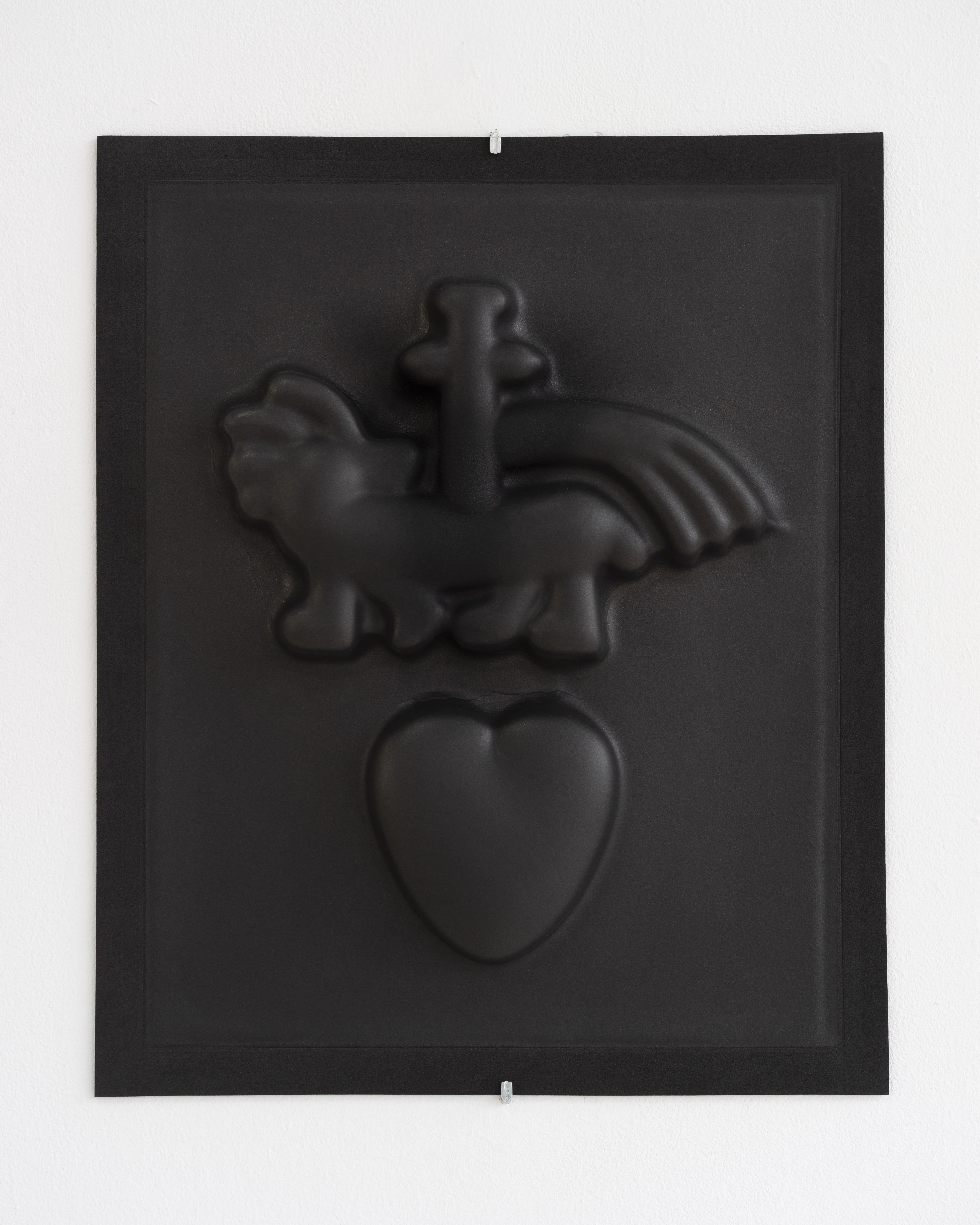
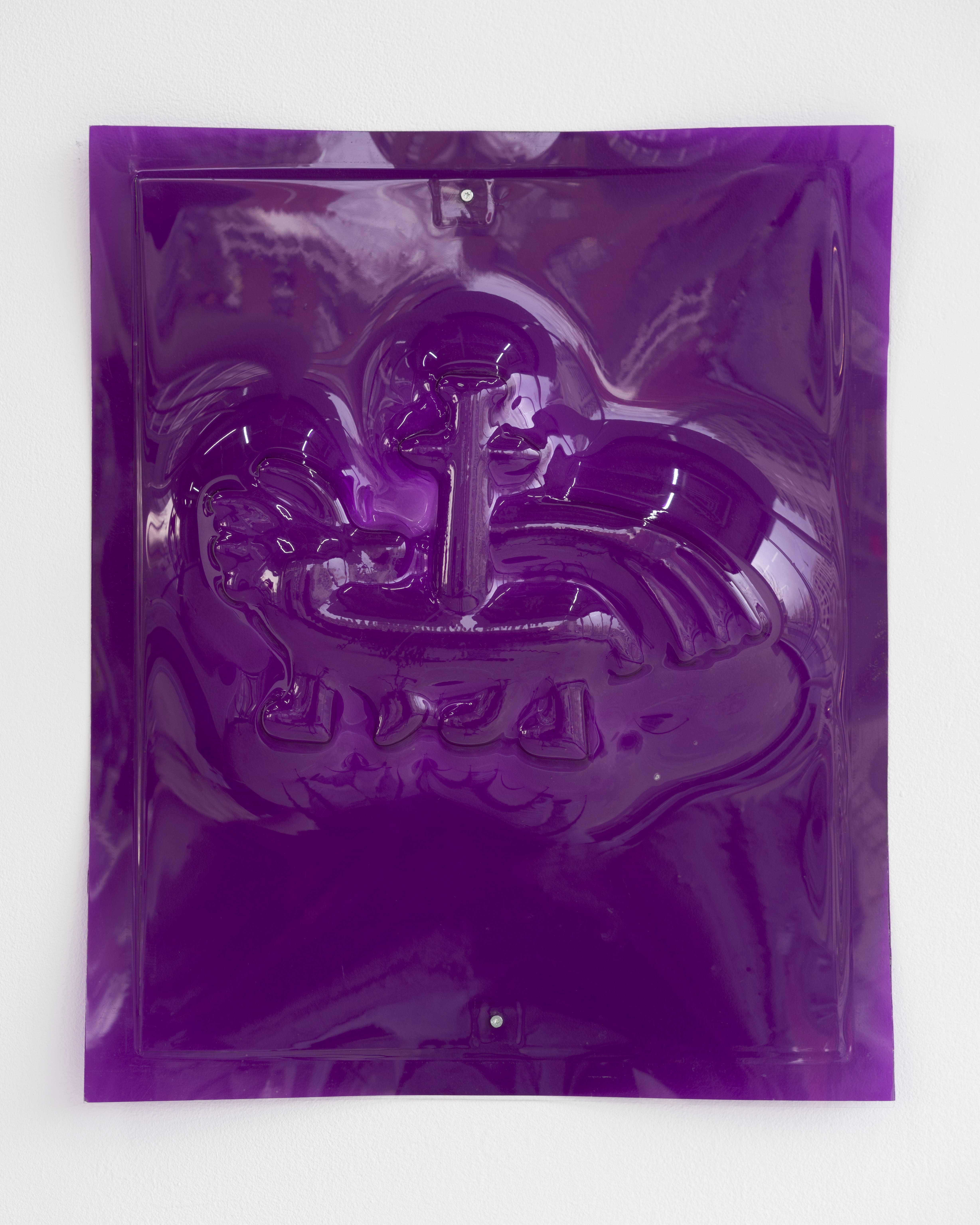
Thermo-vacuum-formed Reliefs
2025, each 46 x 56 x 4 cm
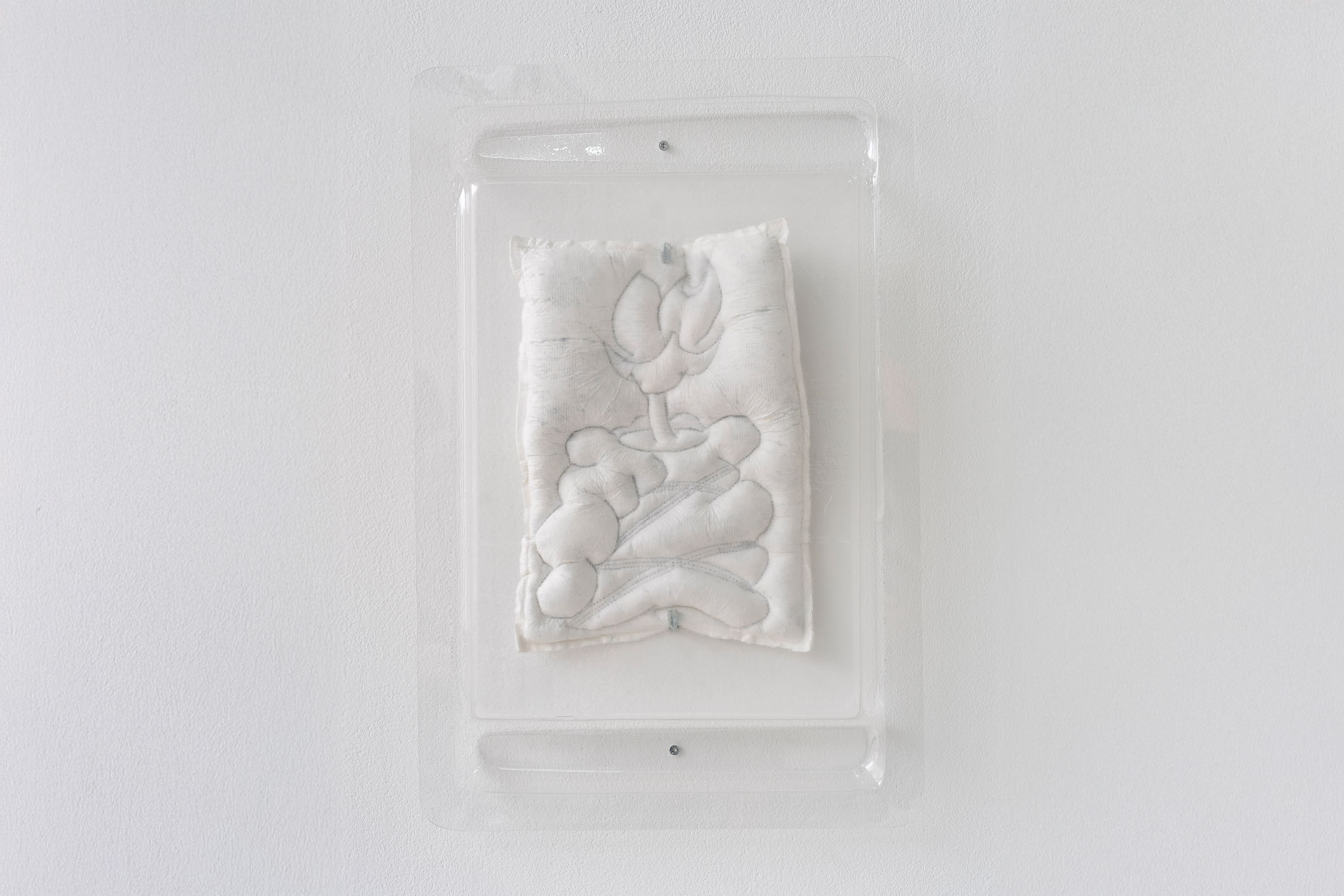
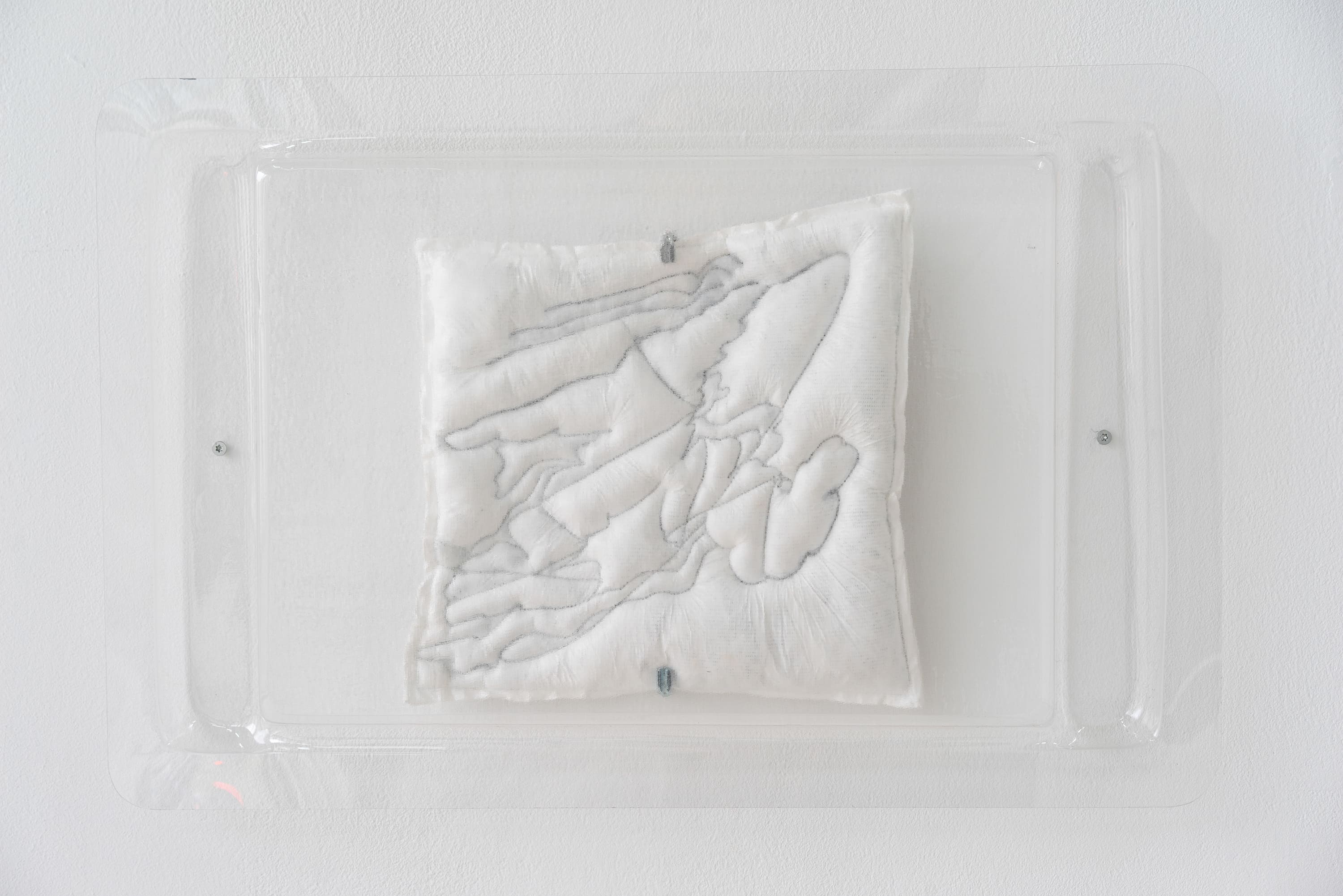
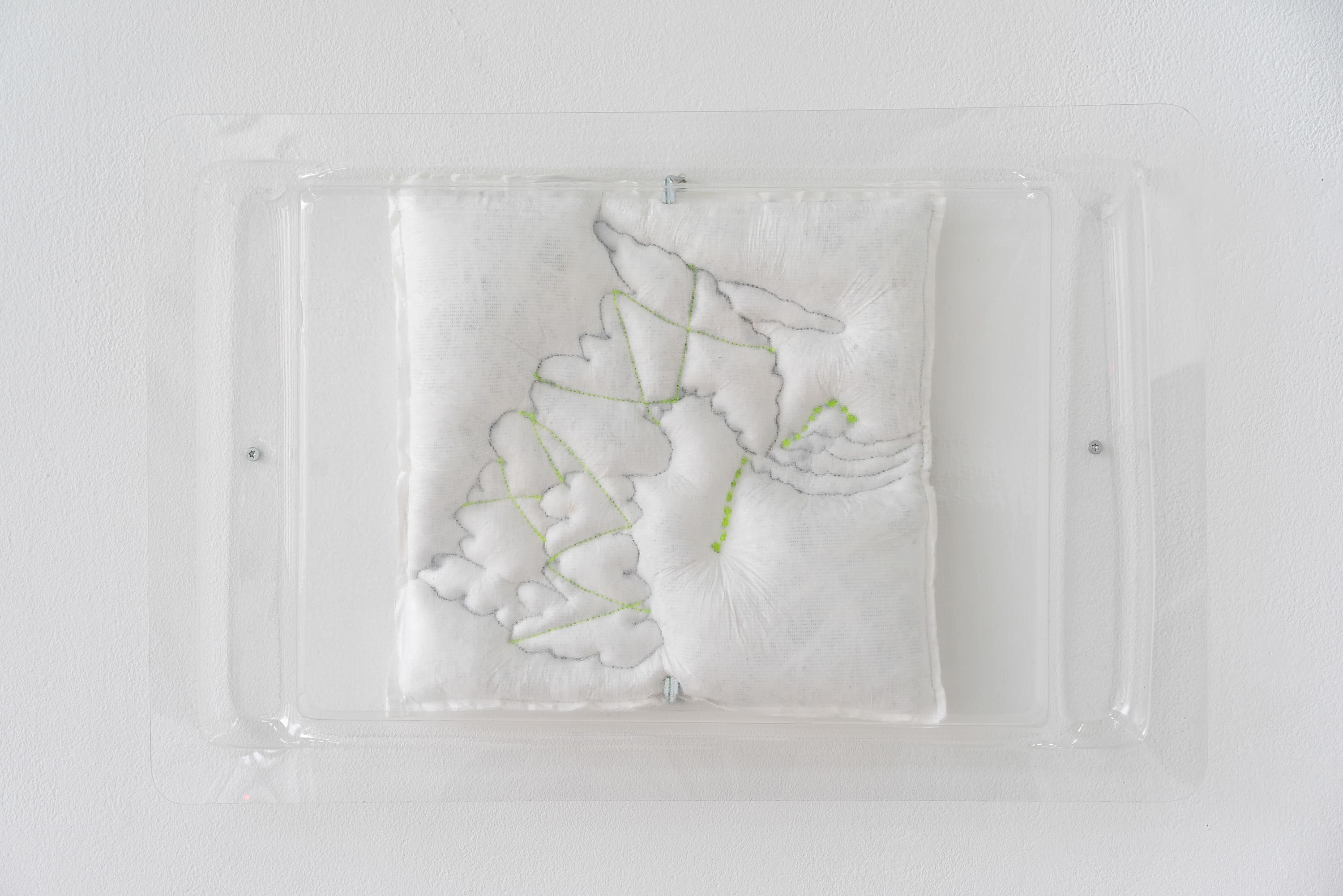
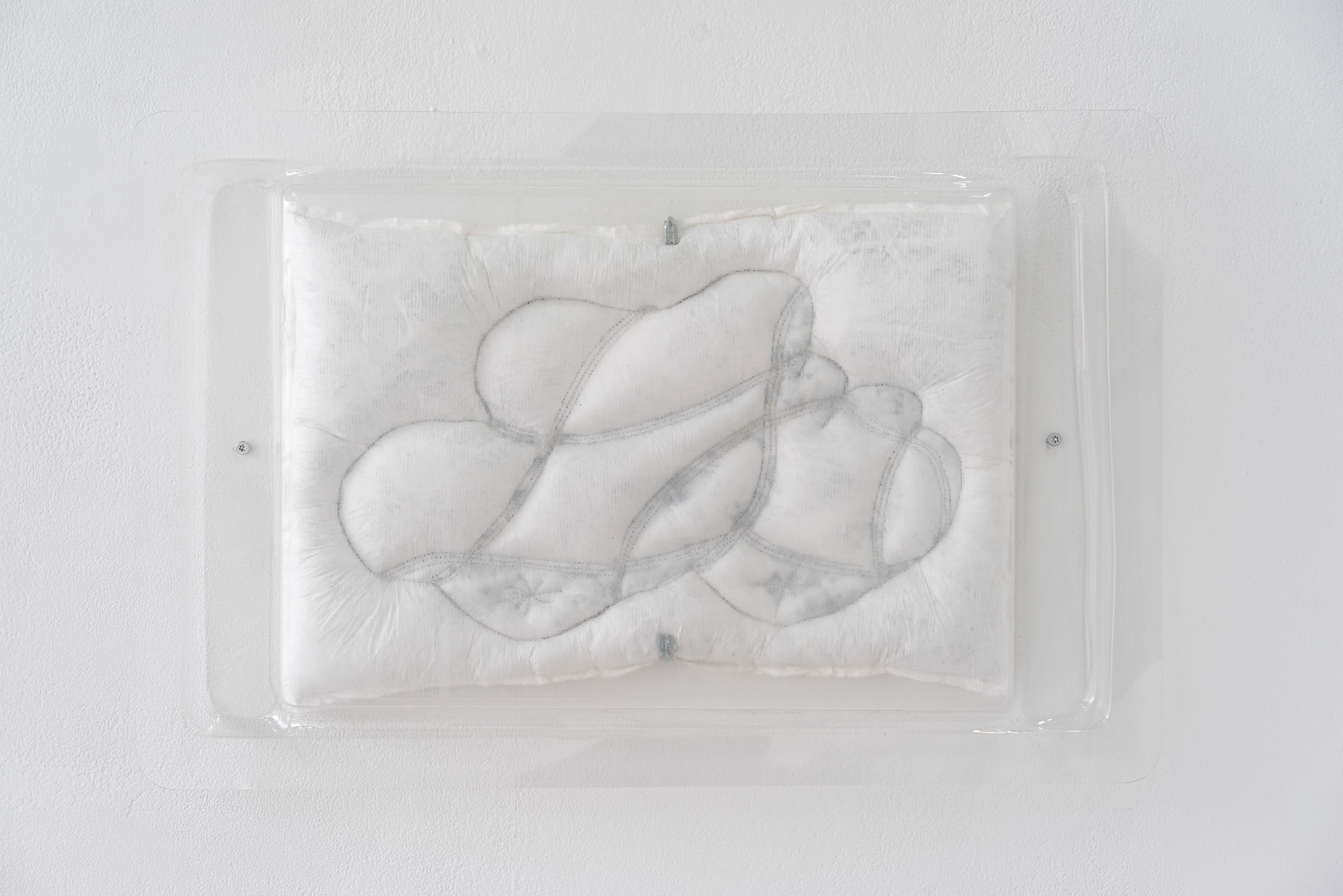
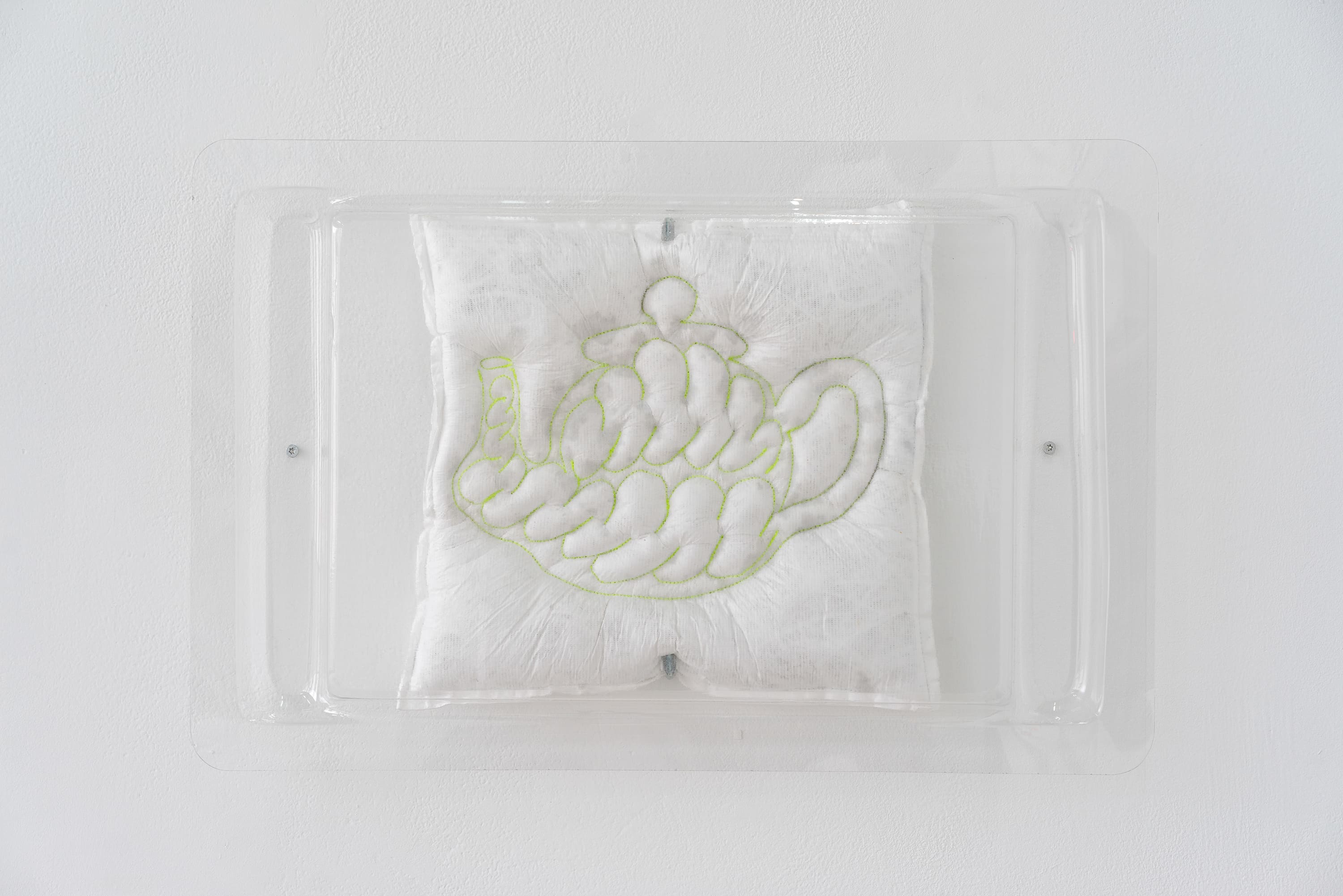
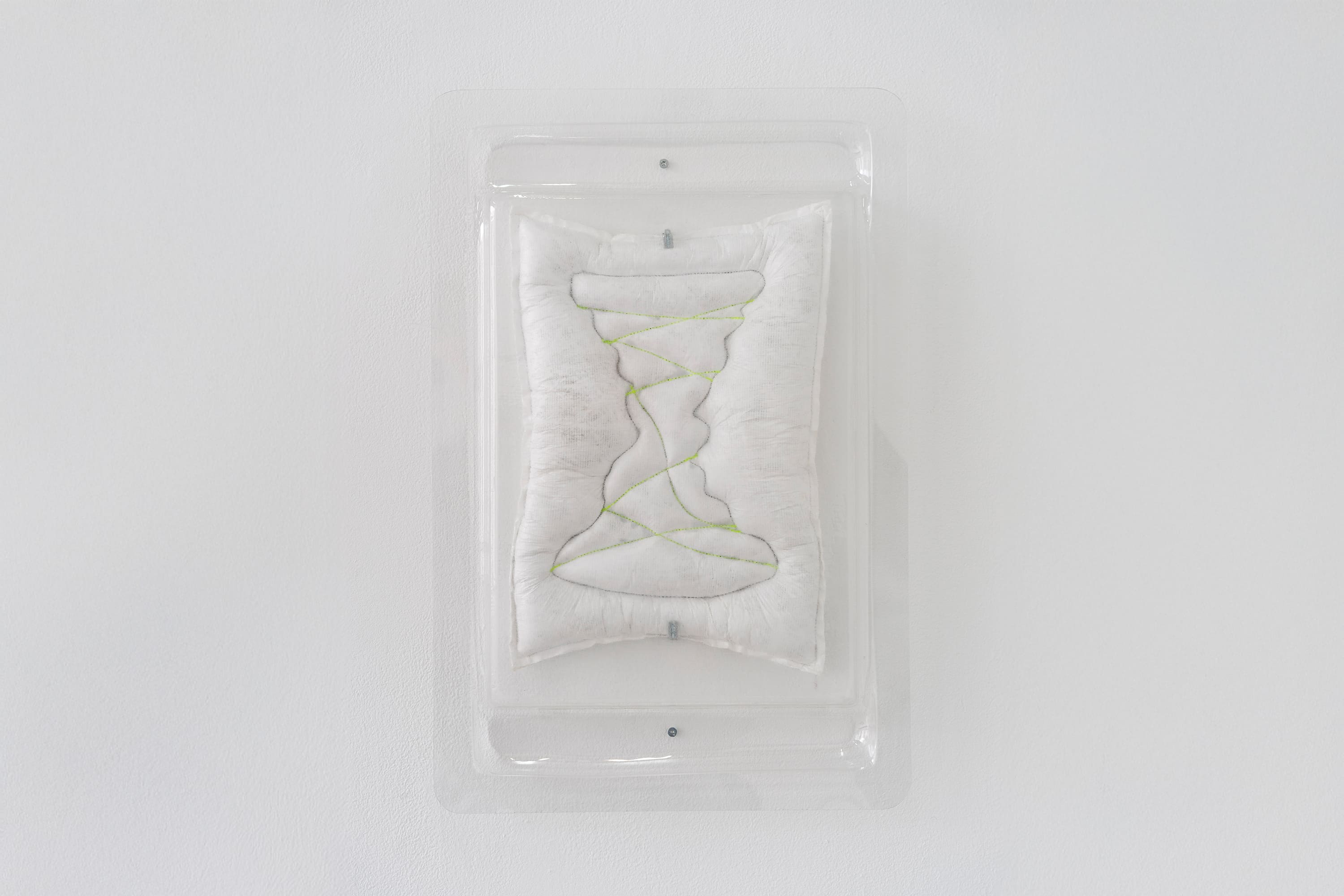
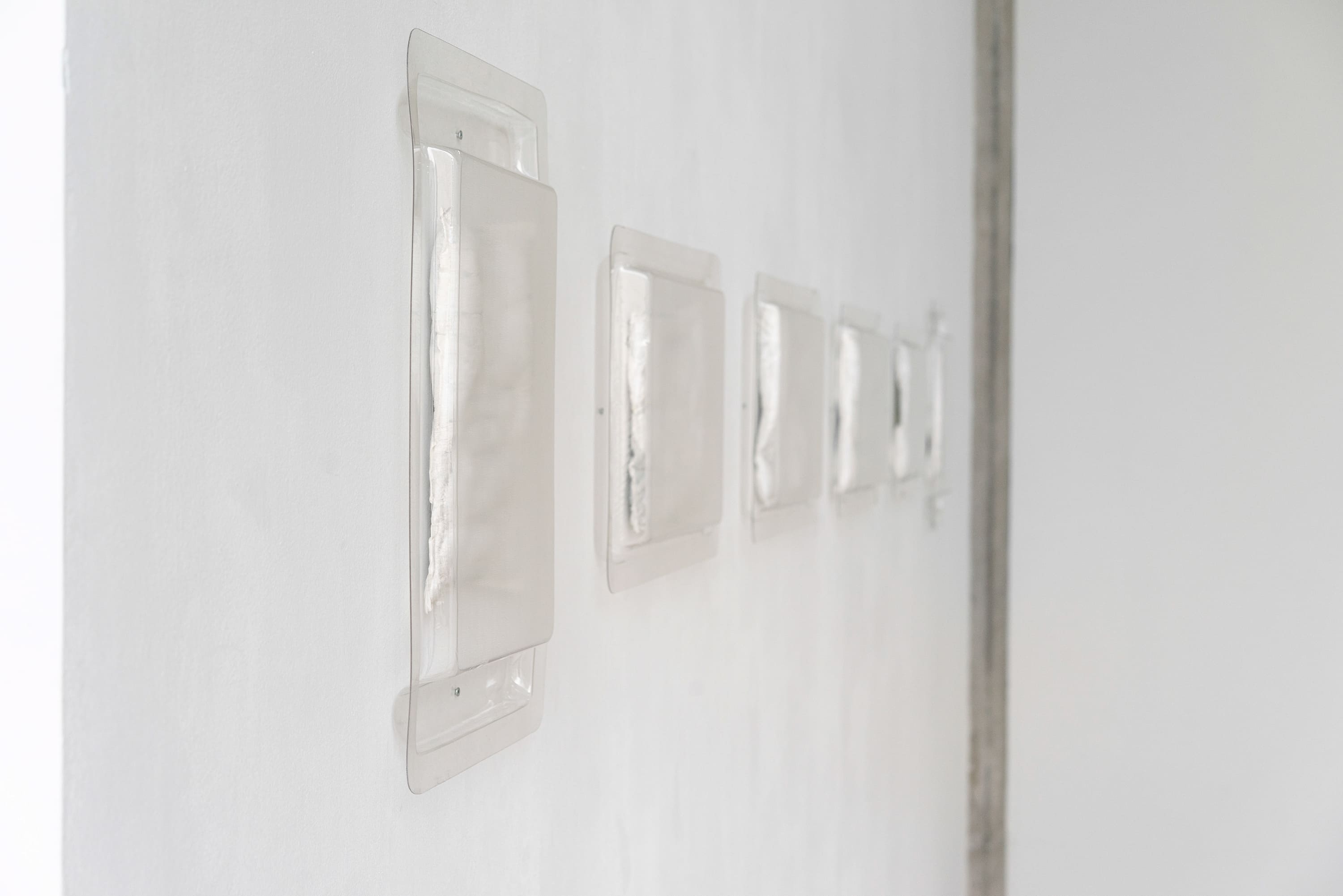
Character Null 1
Character Null 2
Car Null
Heidegger's jug
Gestalt-theory (Figure - Ground)
Textile-Reliefs with Thermo-vacuum-formed Frames
2025, 33 x 50 x 4 cm, 50 x 33 x 4 cm
15.5 x 15.5 x 2.5 cm
Heidegger's jug
26 x 26.5 x 2.5 cm
Character Null 1
21.5 x 20.5 x 2.5 cm
Car Null
36.5 x 24 x 2.5 cm
Character Null 2
26.5 x 25.5 x 4 cm
Flower
17 x 25.5 x 4 cm
Gestalt-theory (Figure - Ground)
20 x 28 x 3.5 cm
Silicon-Reliefs
2025
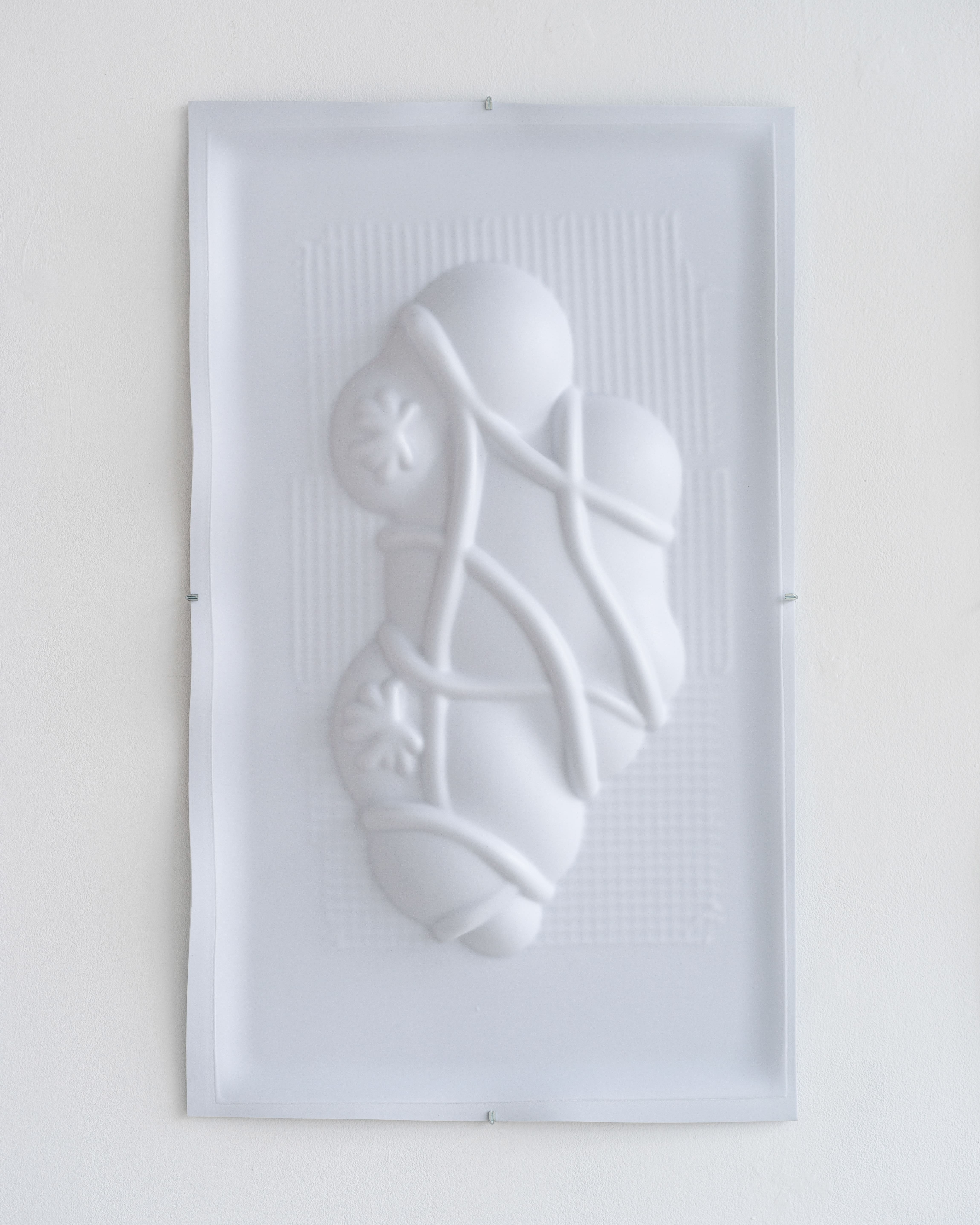
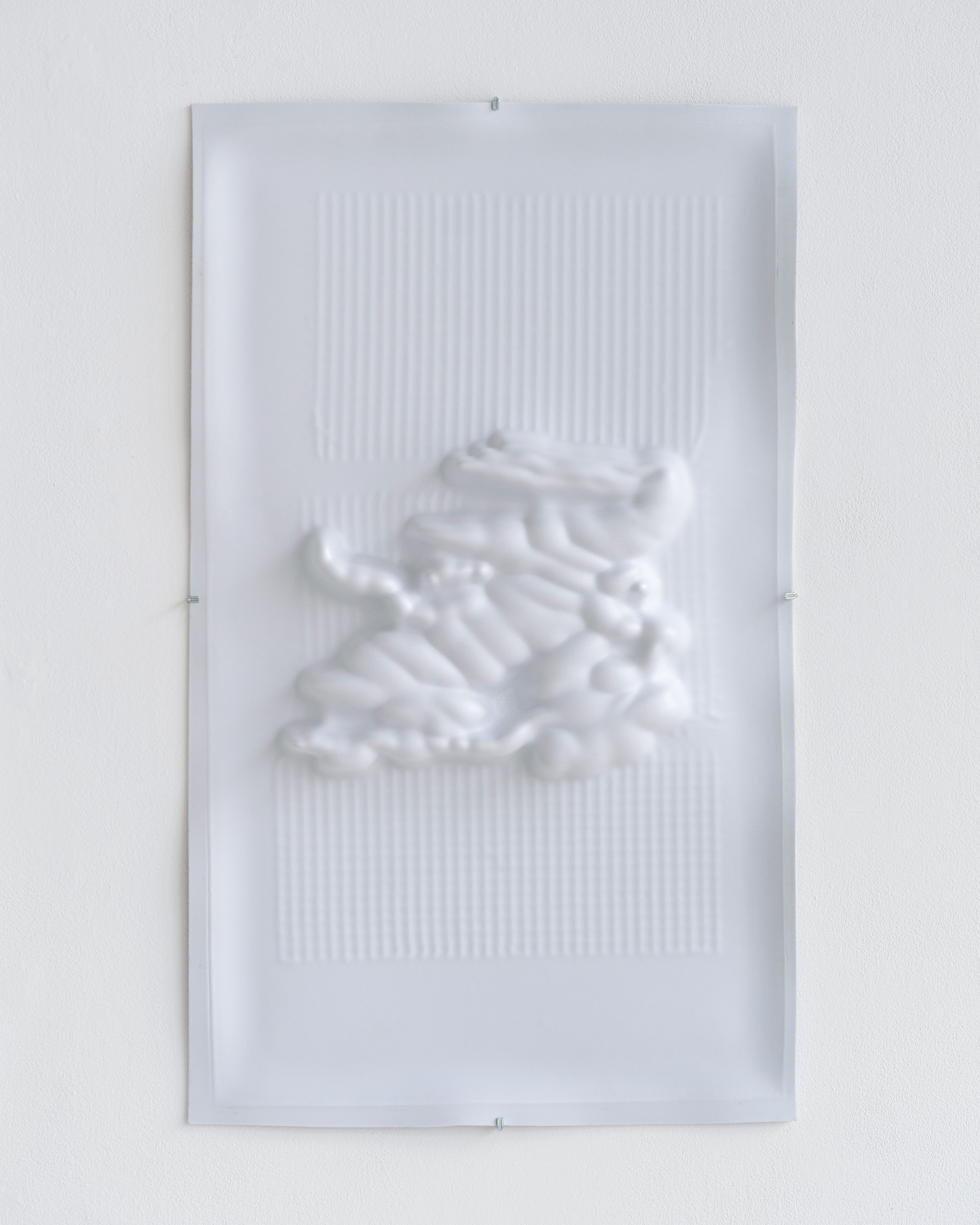
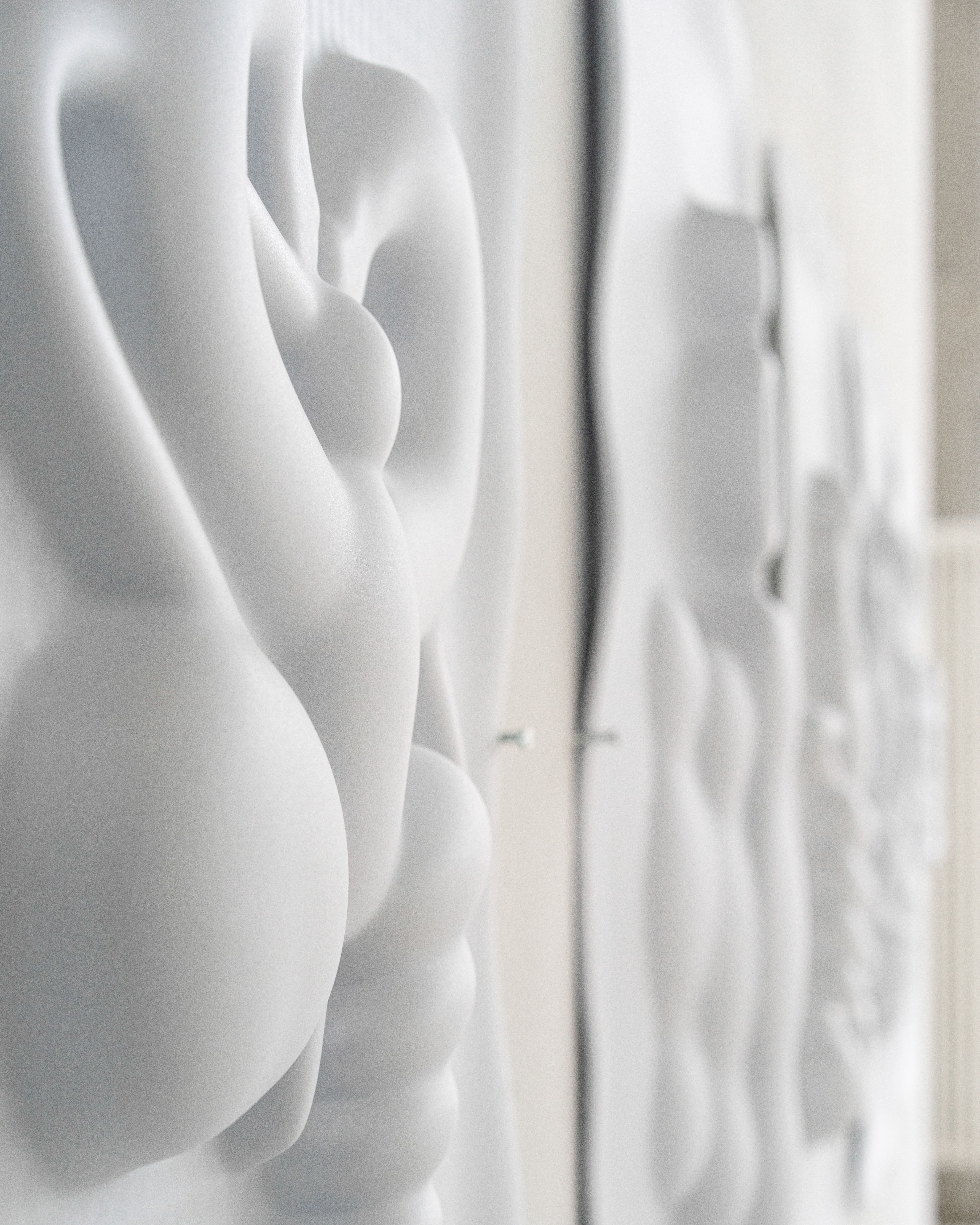
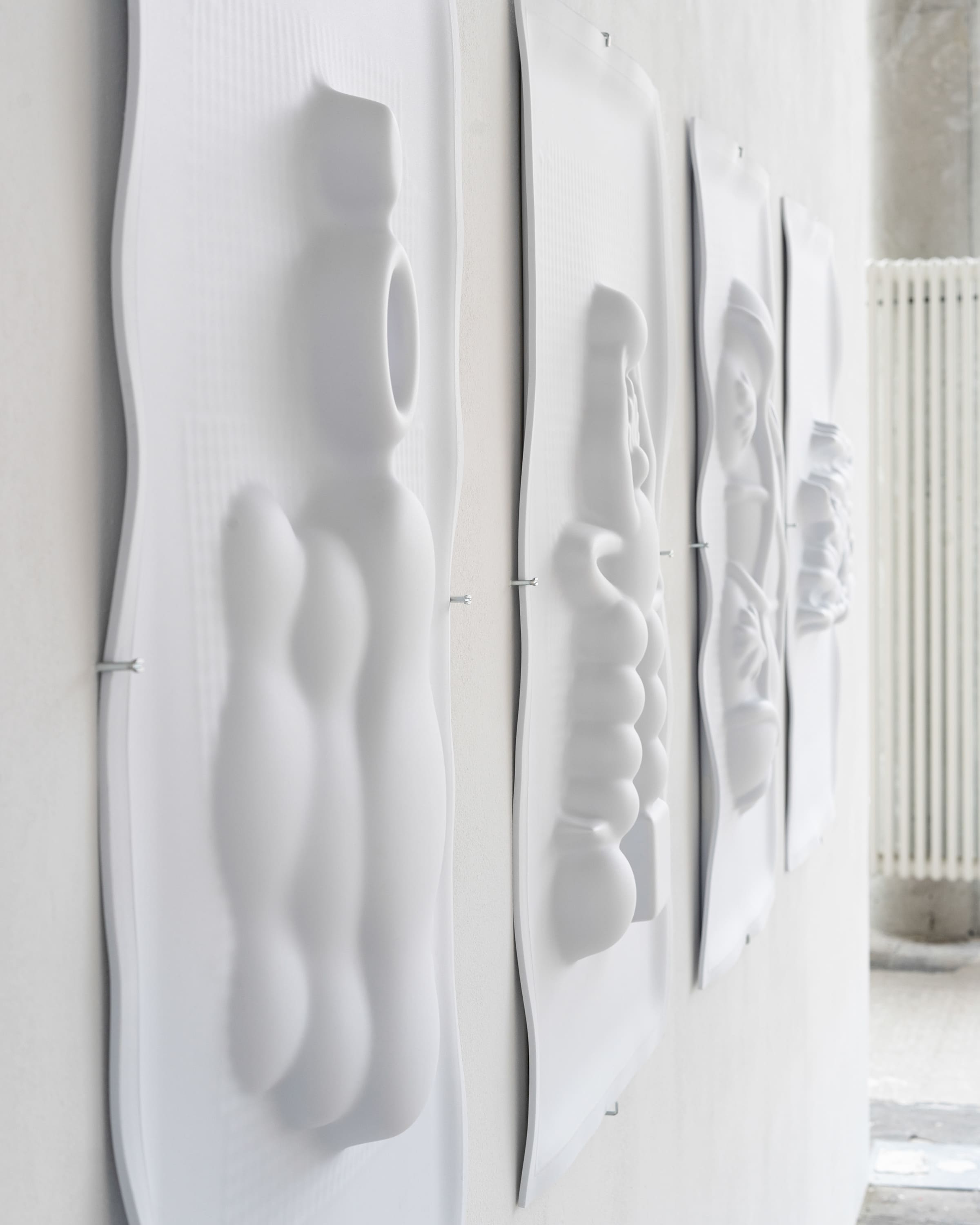
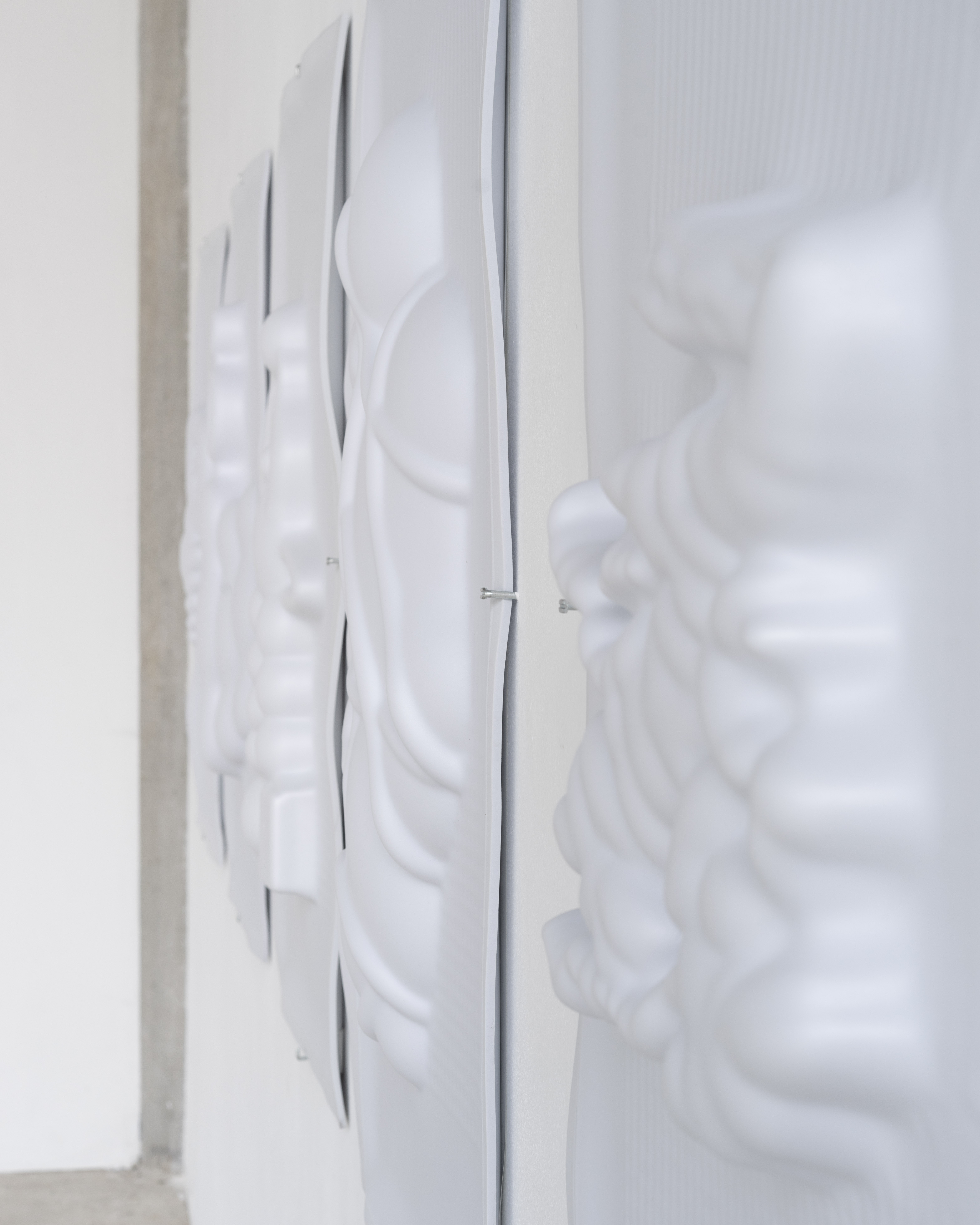
60 x 100 x 5 cm
Null Cake
60 x 100 x 7 cm
Spielbein, Standbein
50 x 100 x 6 cm
Car Null
60 x 100 x 6 cm
Vrikshasana
60 x 100 x 4 cm
Thermo-vacuum-formed Reliefs
2025
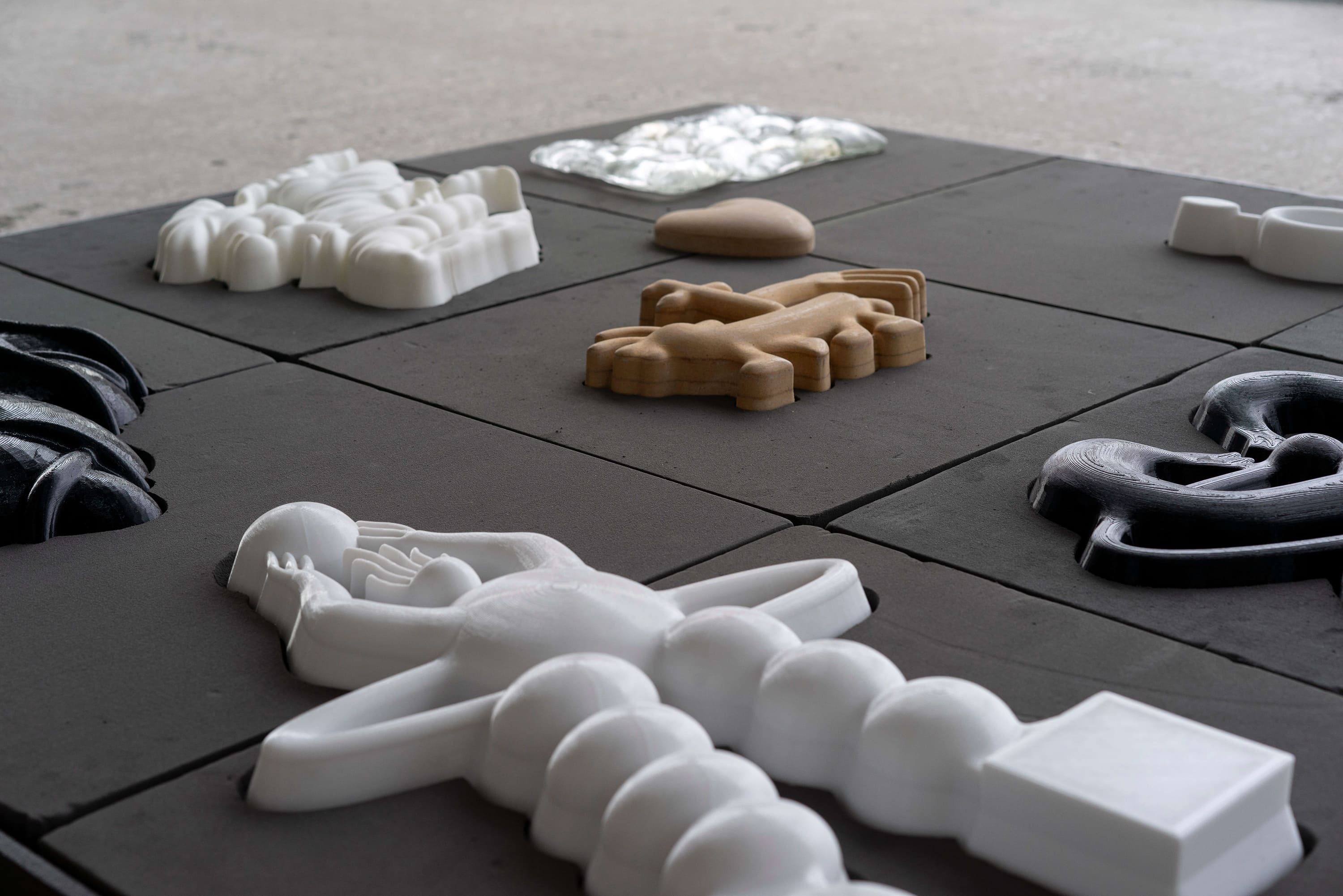
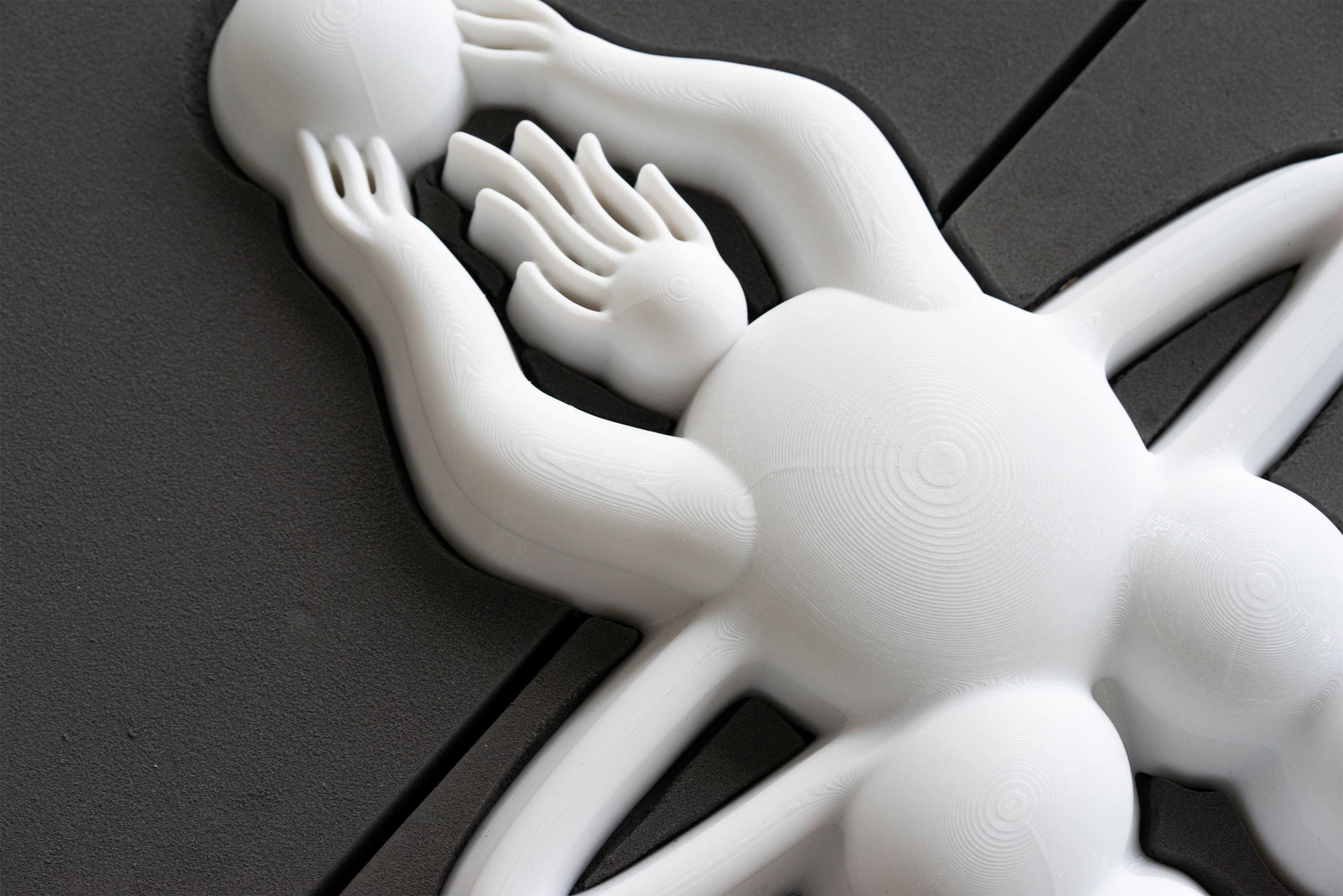
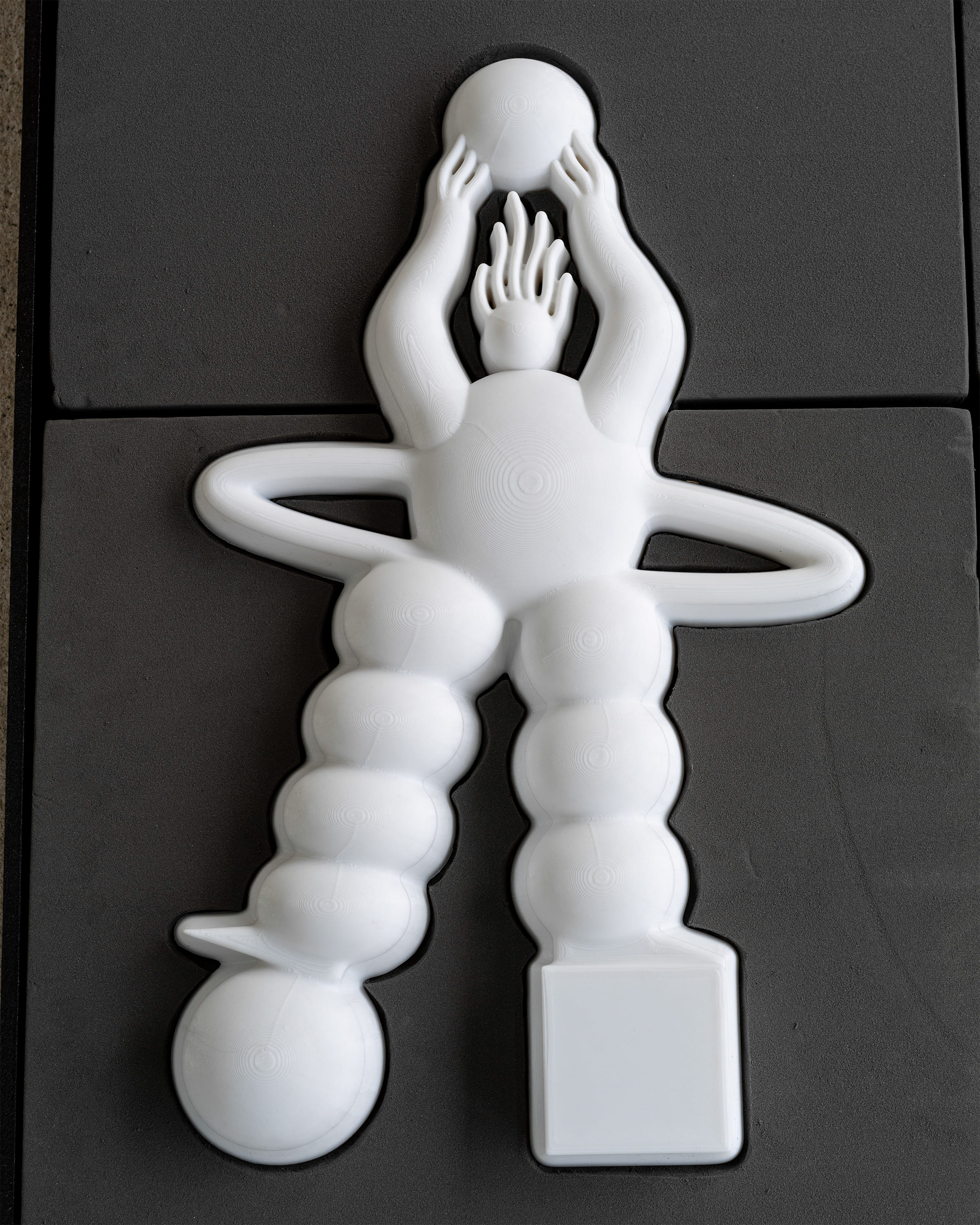
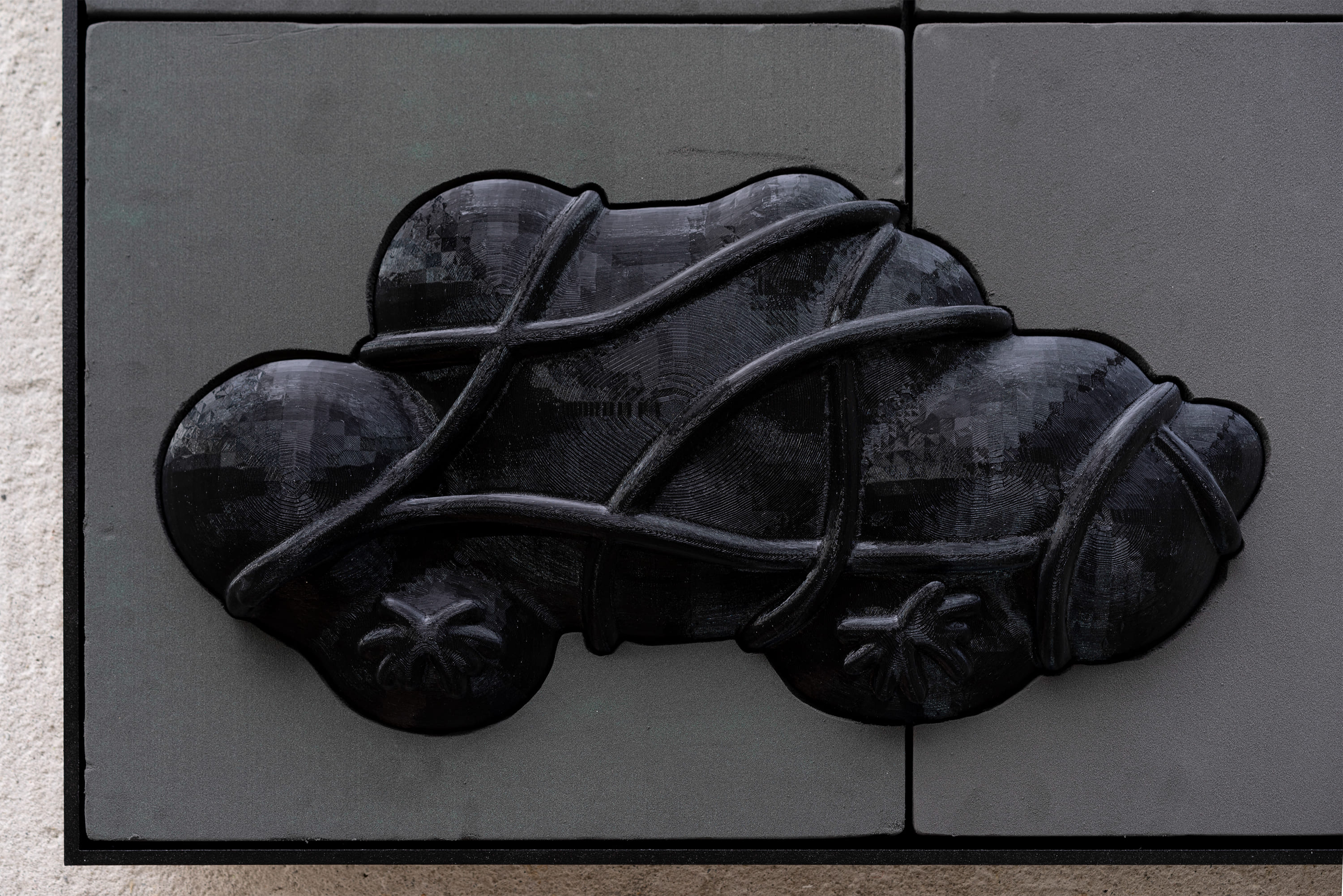
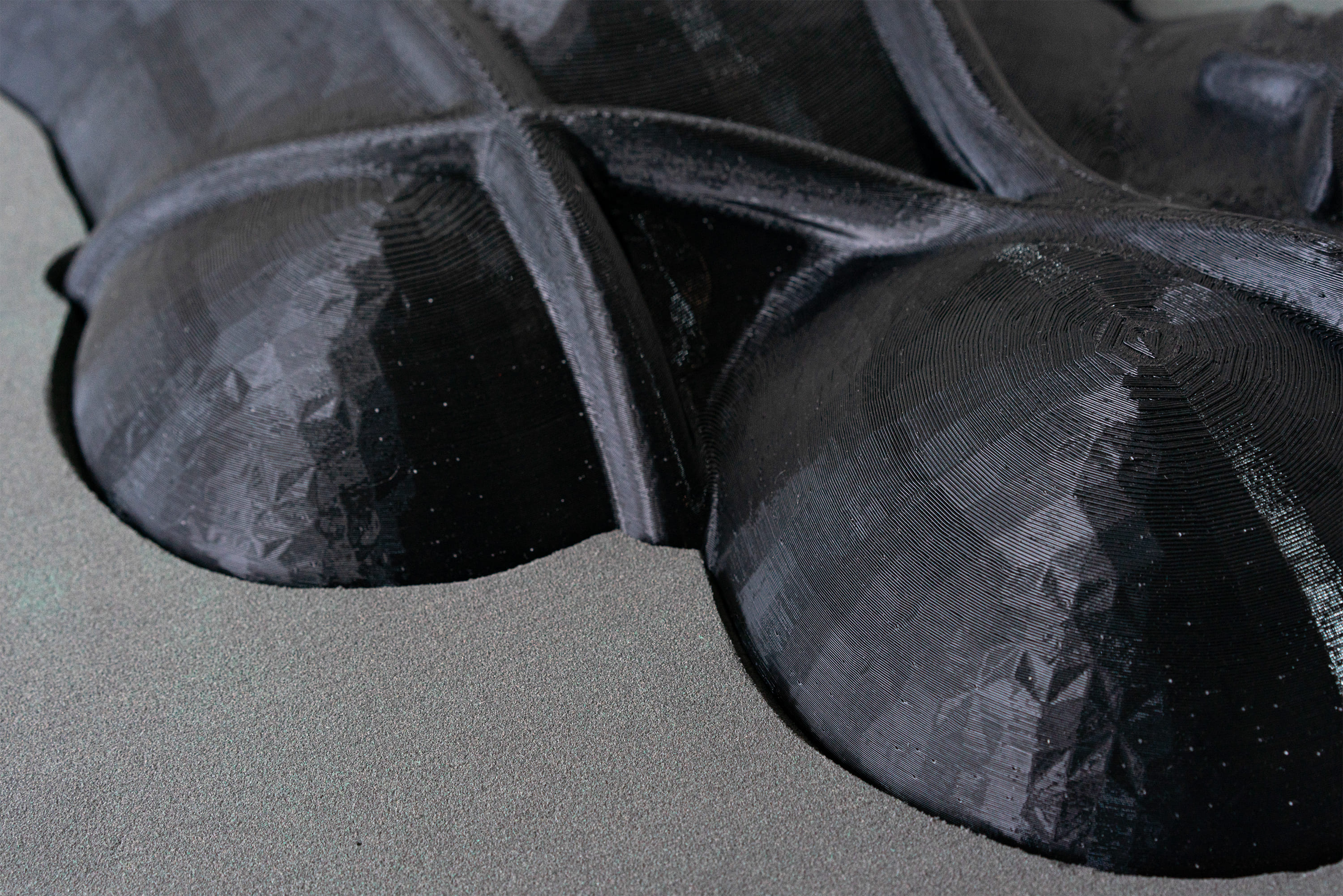
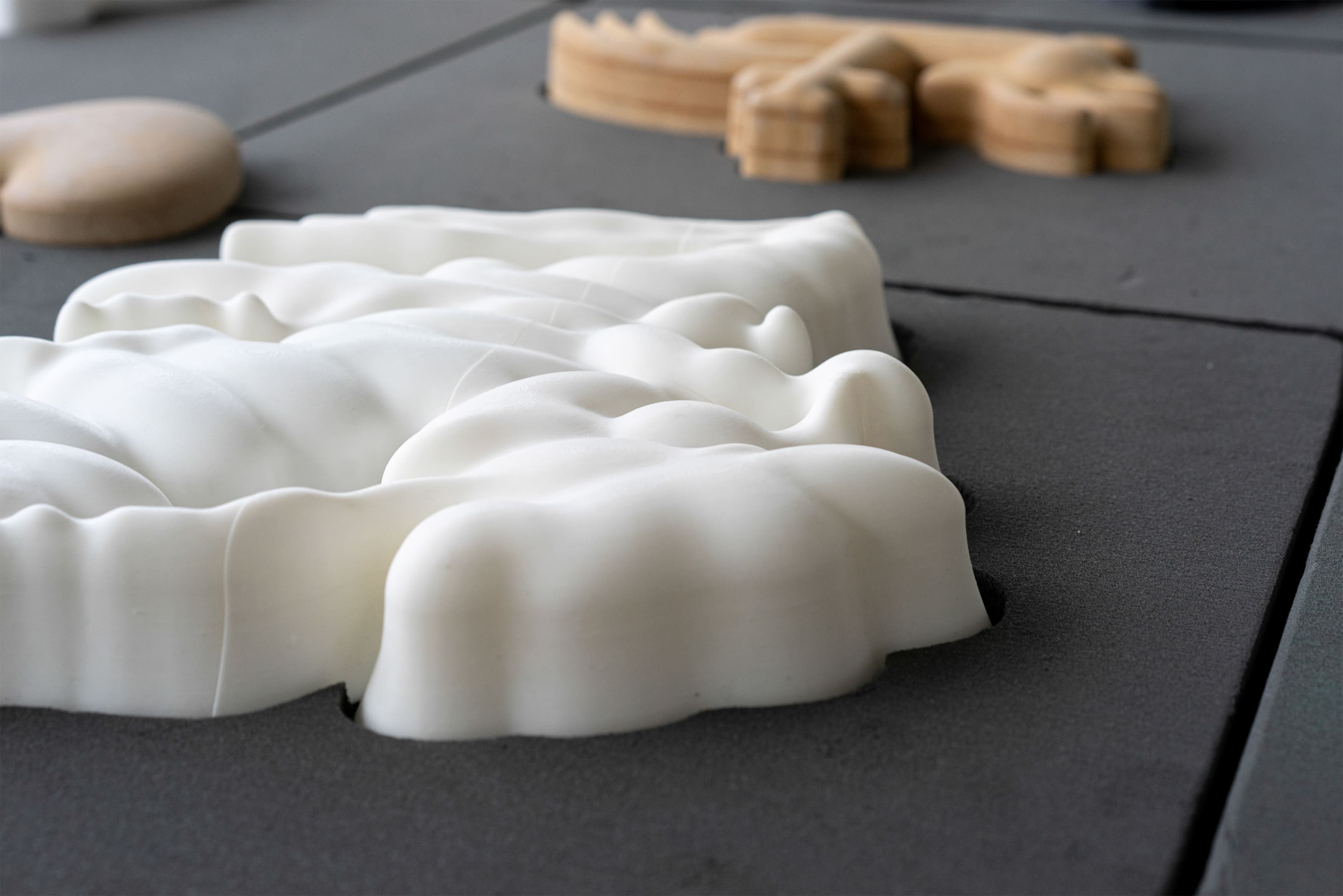
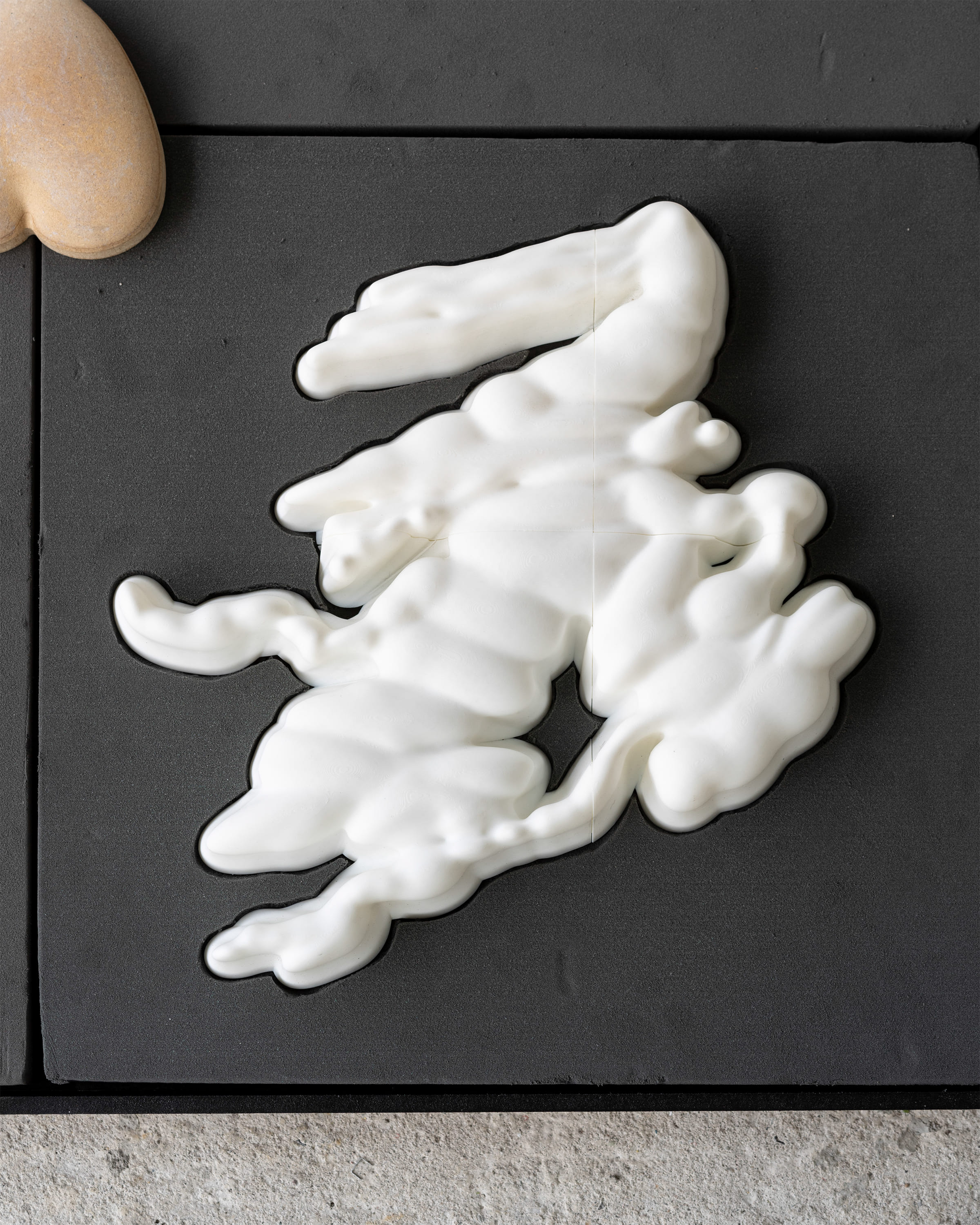
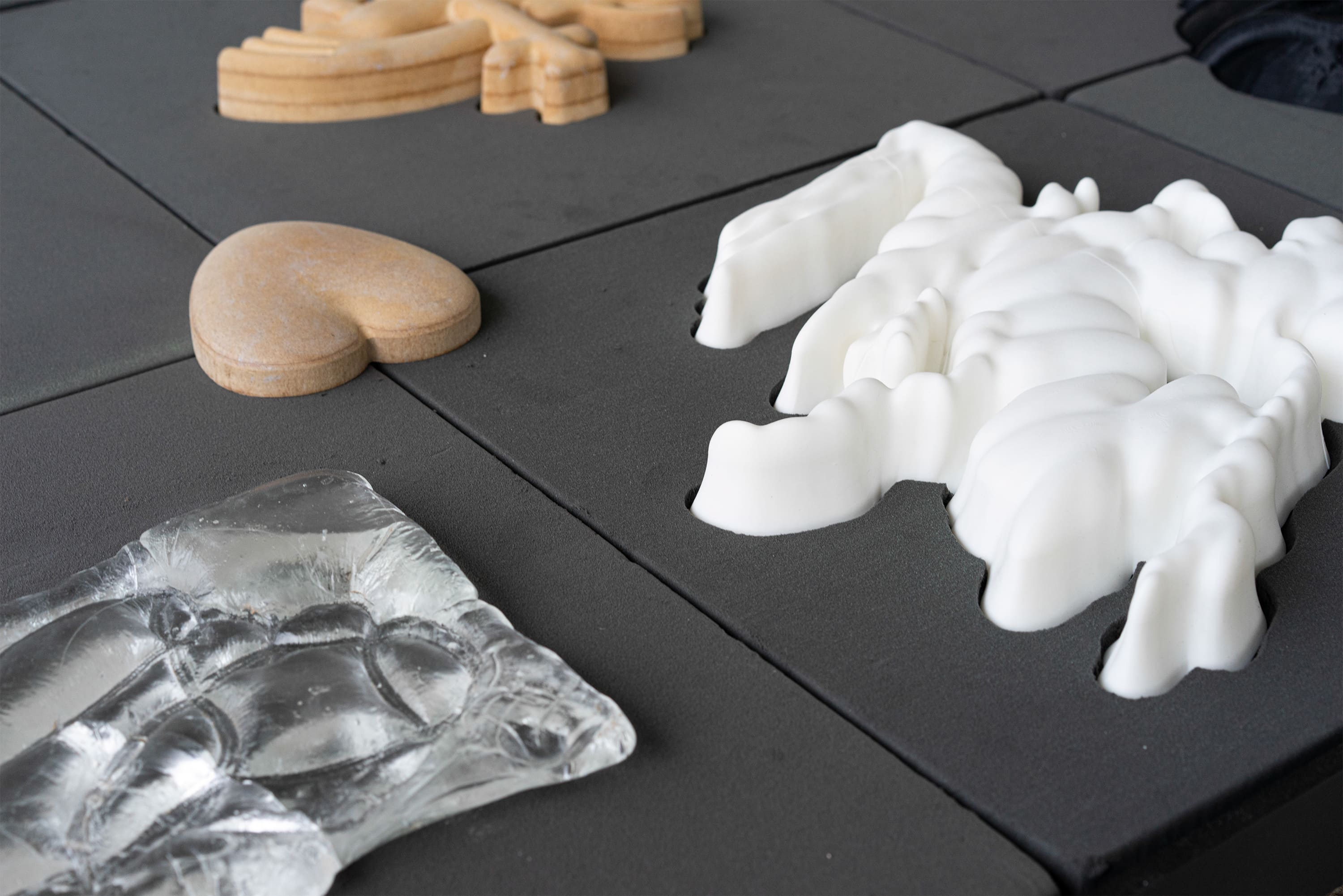
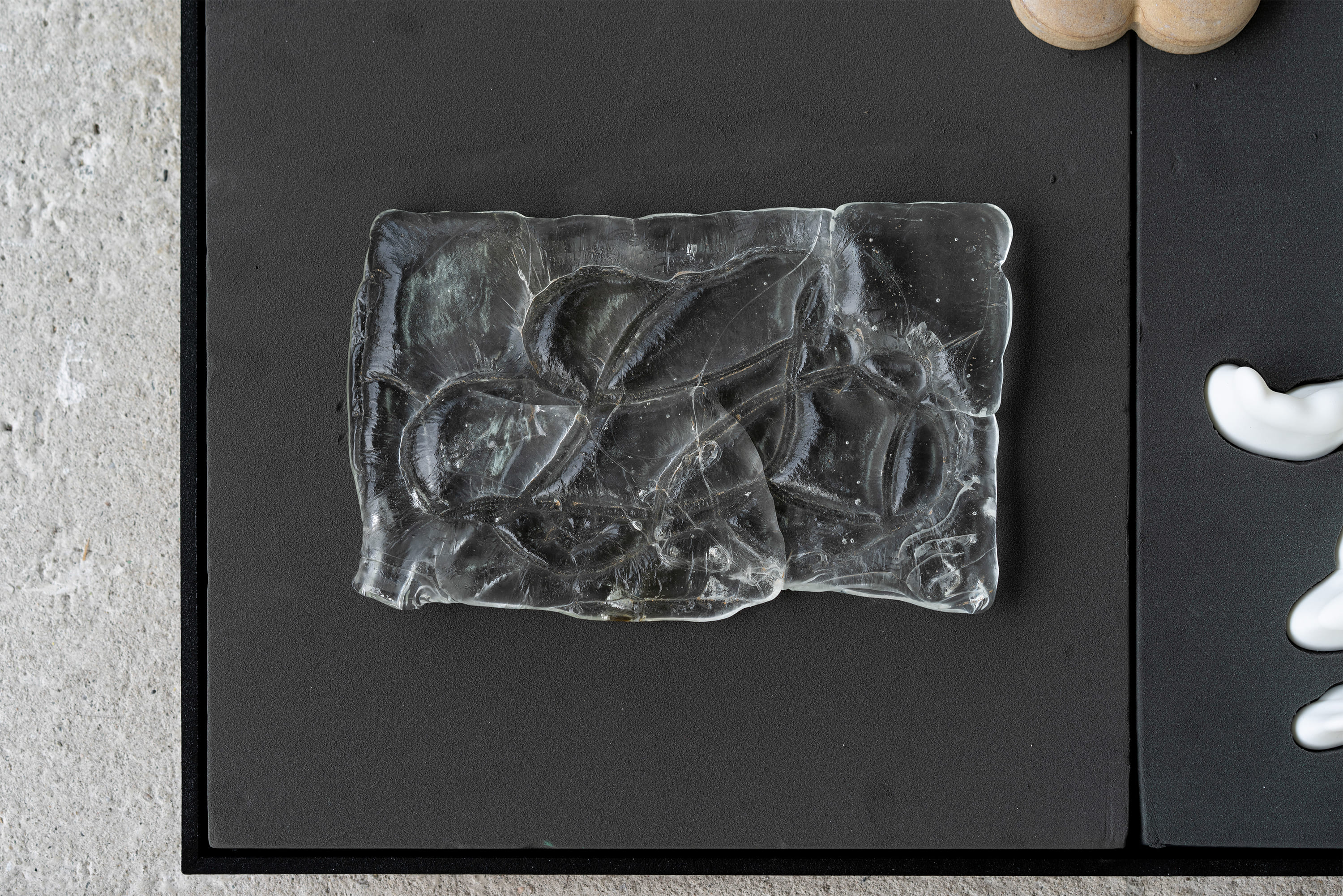
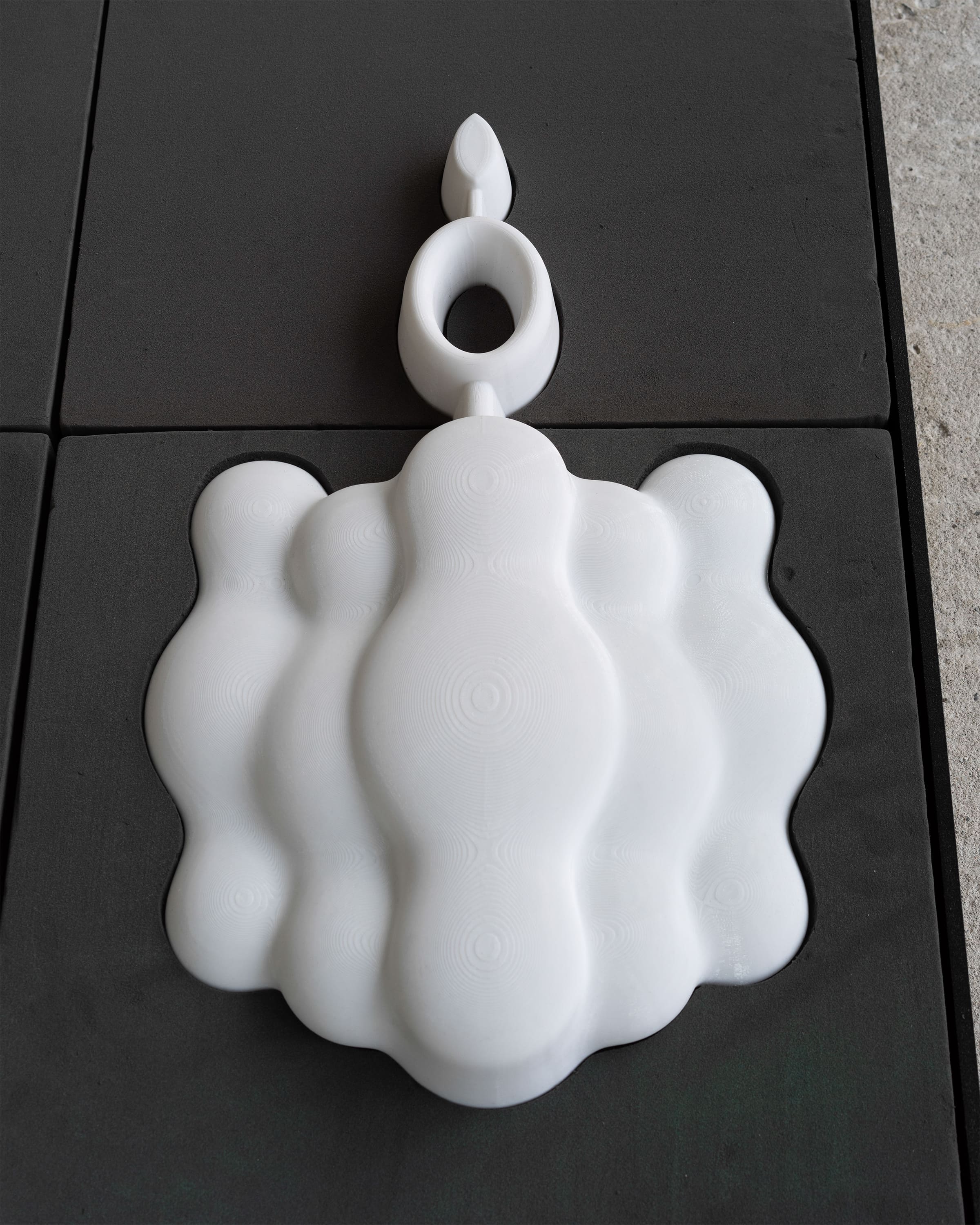
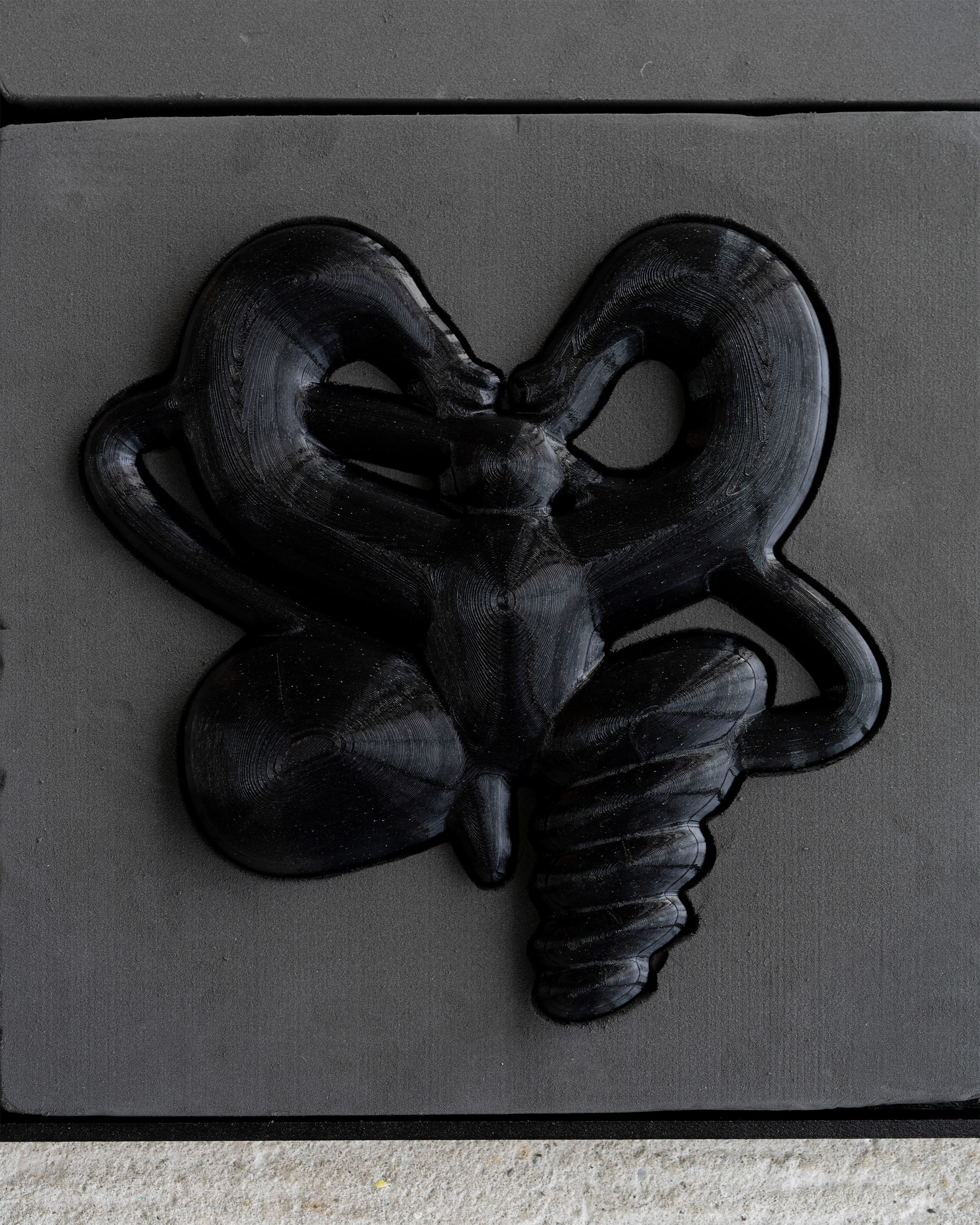
3D-printed Sculpture
38 x 60 x 6 cm
Car Null
3D-printed Sculpture
34 x 67 x 6 cm
Character Null 1
3D-printed Sculpture
40 x 42 x 5 cm
Plus, Minus, Null
Glass-Relief
36 x 22 x 3 cm
Null Cake
3D-printed Sculpture
39 x 64 x 6.8 cm
Vrikshasana
3D-printed Sculpture
40 x 40 x 5 cm
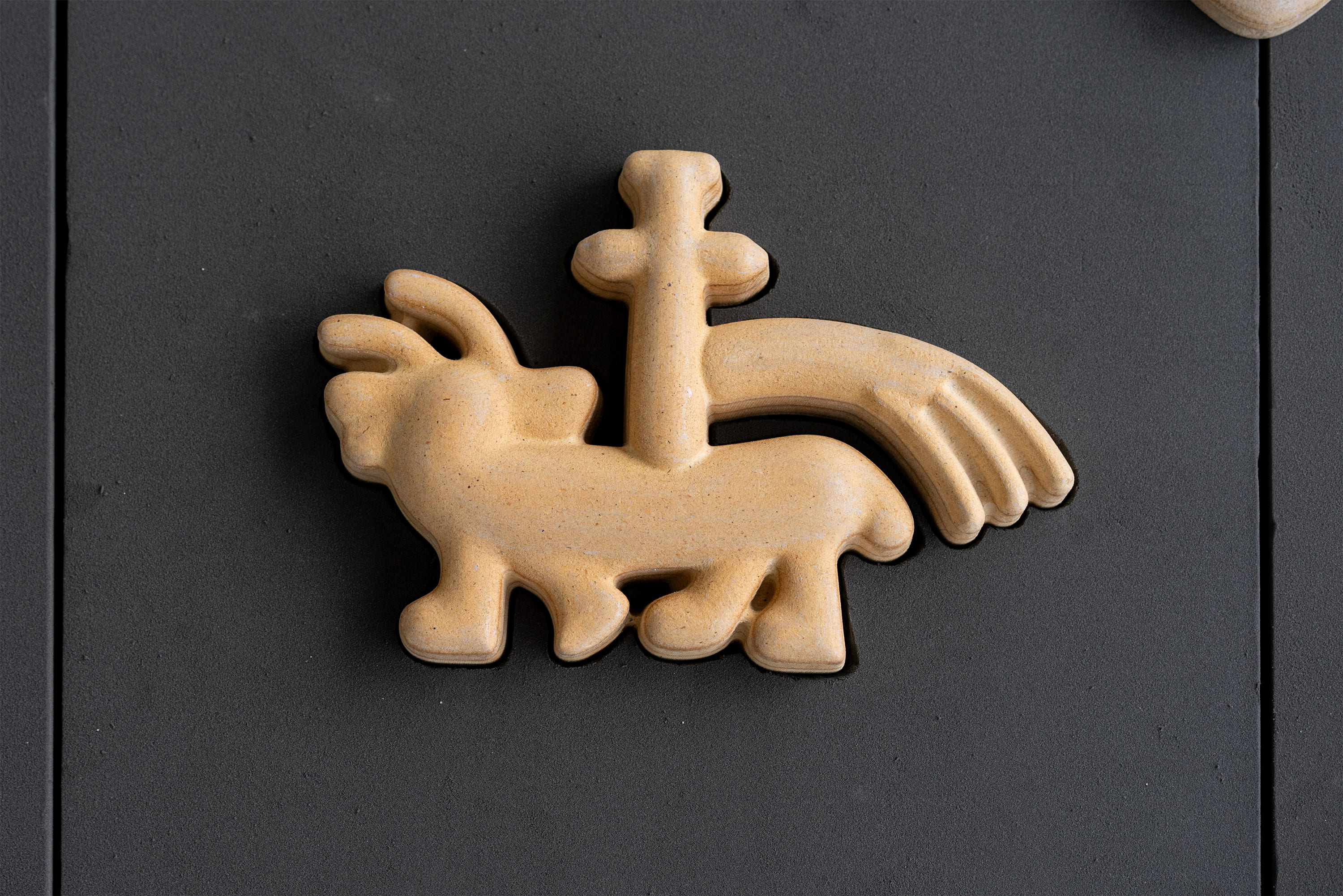
Capricorn
milled wooden Sculpture
31 x 21 x 4.5 cm
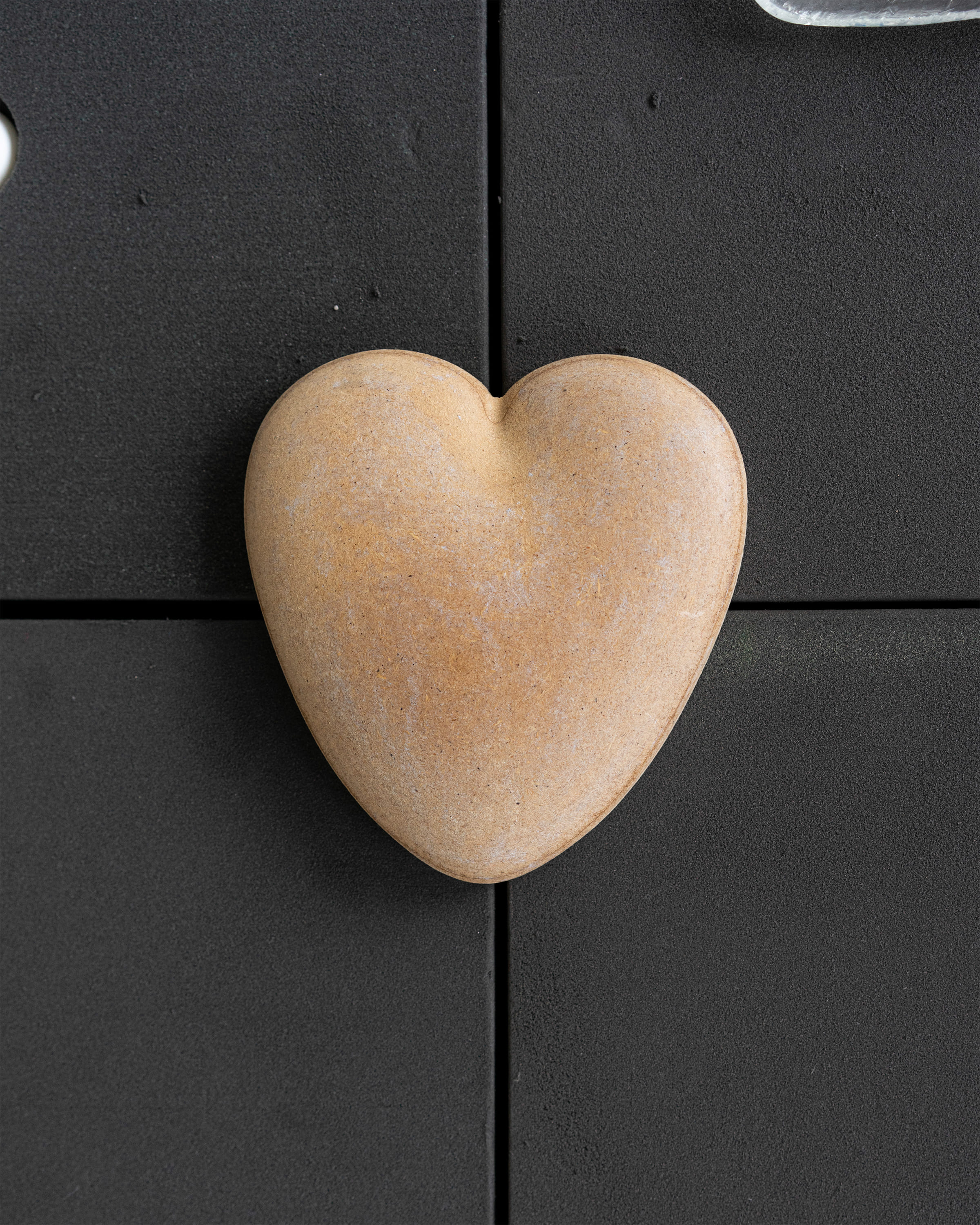
Heart
milled wooden Sculpture
14.5 x 16 x 3 cm
2025
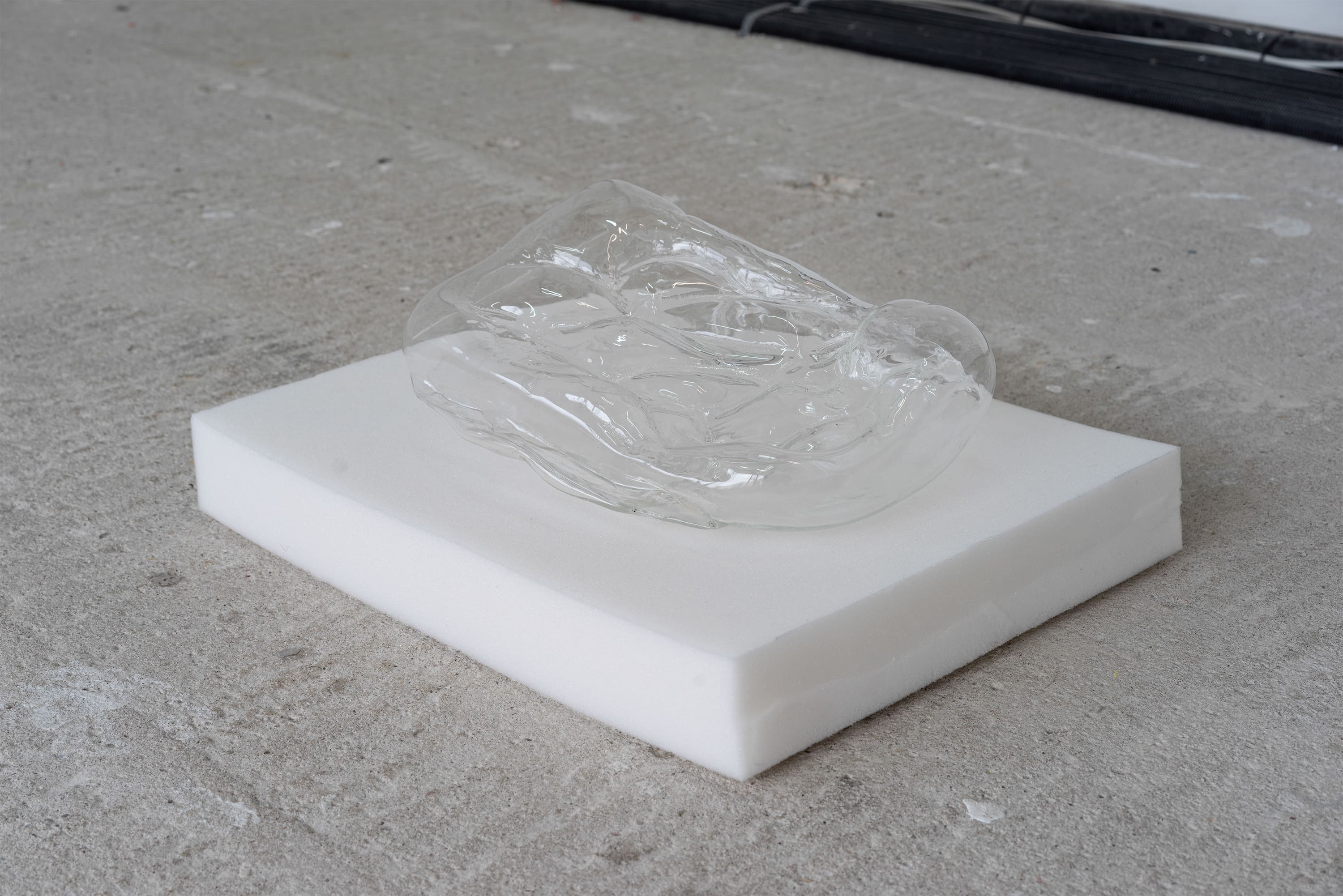
Plus, Minus, Null
Glass-Relief
2025, 40 x 30 x 12 cm
16th Photo by Ilayda Dağli